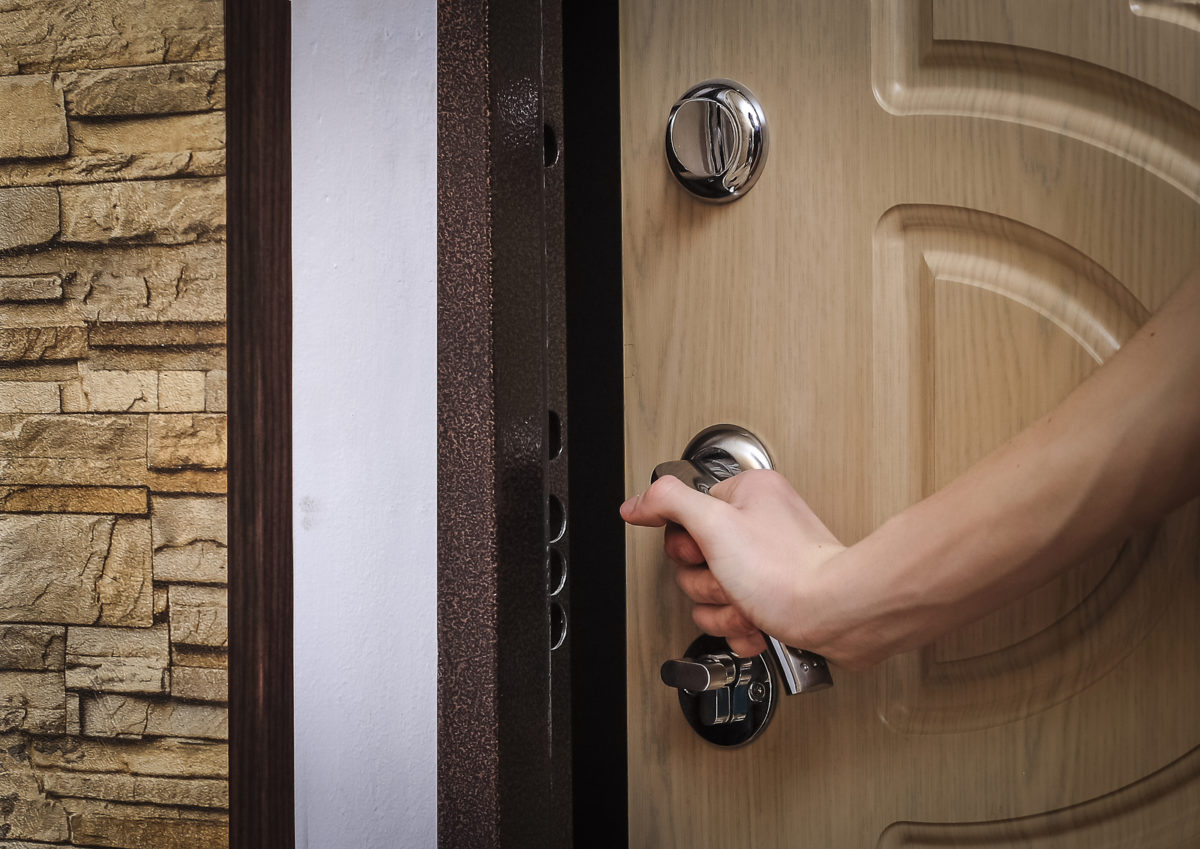

Tips on buying new hardware for your cabinets

The best and quickest way to revitalize a room is with paint. It’s amazing what fresh paint can do. But, don’t stop there – especially if you’re thinking of selling your home.

Simply changing the hardware on kitchen and bathroom cabinetry will complement those freshly-painted walls and make the room look complete.

Best of all, it’s inexpensive and there are a multitude of choices in color, finish and shape.

What to look for when shopping

What style is the room? Especially in the kitchen, keep the style of the hardware the same as the style of the room.

For instance, in a contemporary kitchen you’ll want hardware that is minimally ornamental – streamlined and simple. If you have stainless steel appliances, consider a similar finish for the knobs and pulls.

Is the hardware comfortable to use? Don’t be shy – grab them as if they were connected to a drawer or cupboard to ensure they’re the right size for you and comfortable to use.

Keep proportion in mind. Tiny knobs on a large cupboard won’t cut it.

“A good rule of thumb for traditional or transitional style pulls is that they should be about one-third of the length of the cabinet drawer,” suggests the experts at Meridian Homes, and “more contemporary designs call for longer pulls that are at least two-thirds of the length of the drawer or cabinet door.”

They go on to say that if drawers measure more than 18 inches in width, you may one to use more than one knob or pull.

Finish is as important as style. There are so many finishes from which to choose, it may be as challenging as choosing the style of hardware.

As mentioned earlier, stainless steel is ideal for most contemporary kitchens while brass or pewter is better suited to traditional rooms. Get an idea of the many hardware finishes at theknobbery.com.

Where to shop

Yes, the big-box department stores typically carry a large assortment of cabinetry hardware, but if you’re looking for something different, there are many other options, online. I

n fact, you can shop those big box home improvement stores online as well. Lowe’s and Home Depot both carry cabinet hardware.

Knob Depot

We love this site for the sheer simplicity of its search function. You won’t have to scroll through page after page of hardware because you can narrow your search by a number of criteria. Search by room, by finish, diameter and more. Start your search at knobdepot.com.

Jet

Jet.com offers an interesting and eclectic selection of knobs and pulls. Not the least expensive of the bunch, but if you’re looking for something specific, you may find it here.

Hayneedle

We love the Velocity Cabinet Knob (and the price too!) but Hayneedle has many other styles from which to choose. Prices run from quite reasonable to rather expensive. We also like that we can narrow the search according to shape, finish and size. Check out the knobs and pulls at hayneedle.com.

Wayfair

If you have money to burn, check out the high-end hardware at wayfair.com. For a smidge more than $253, you can purchase a beveled-glass knob (screw not included!) and, for much less (but still pricey) Mother of Pearl or Swarovski crystal beauties. At the lowest end of the price scale you’ll find basic plastic and wood knobs for as low as $1.29.

On a tight budget?

While we can’t vouch for the quality, there are many discount dealers online. Check out Knobs4Less.com, Overstock.com, Discount Home Furnishings and Ikea. Read the reviews from people who’ve purchased items to get an idea of quality.

You may also locate unique hardware on the items for sale at the Habitat for Humanity’s ReStore near you.

5 Tips for the Best Home Showings

OK, truth time: There’s nothing more disruptive to home life than to have your home on the market.

Chasing the kids around, nagging at them to pick up their clothes and toys, ensuring the dishes don’t pile up in the sink and the dirty laundry is tucked away, out of sight.

And, if you have pets, it’s even more challenging

Yes, it’s stressful to have to keep the home clean all the time. But, presentation is everything when it comes down to getting the most money possible for it.

Consider the following tips to help buyers see your home for the gem that it is.

1. Get rid of the stink

 We’ve all walked into someone else’s home and smelled it – the stale cigarette odor, what they had for dinner last night or the über stinky cat box.

The problem, however, is that we are so acclimated to our own homes that we typically can’t determine if they stink or not. If you have kids, pets and smokers in the house, however, it’s a safe bet that it does.

Cigar and cigarette smoke is the most difficult to get rid of, but check out our blog post, here, for some tips.

Cooking odors tend to cling to anything upholstered, so clean and deodorize the carpets, wash the curtains, bring in a pro to dry-clean the furniture and clean the filter in the range hood.

Pet owners need to ensure that the cat box is cleaned daily and the dog is bathed frequently while the home is on the market.

Other tips to consider include:

  • Washing indoor trash containers thoroughly with hot, soapy water. Then, take the trash out before showings.
  • Bathrooms can get pretty rank, so Better Homes & Gardens suggests filling a decorative dish with cotton balls that you’ve dabbed with essential oils.
  • Fill decorative containers with potpourri and place them randomly throughout the home.

2. Mask the noise

Have you ever lived close to an airport or, even worse, railroad tracks? The noise may have been deafening for the first month or two. Then, you got used to it.

Potential buyers touring your home are in the early stages of noise sensitivity and they will most definitely hear the neighbor’s annoying, yappy dog.

If noise pollution is a problem in your neighborhood, mask it. Here are some tips:

  • Set the computer up to play a sound effects loop (rainfall and babbling water are soothing).
  • Leave music playing, softly, during showings.
  • Purchase a white noise machine.

3. Lighten up

There’s a reason that real estate agents tell their clients to open all the window coverings and turn on all the lights before showings. Light and bright rooms are far more appealing than those that are dark. Consider the following as well:

  • Use higher wattage light bulbs while the home is on the market.
  • Don’t forget the closet lights – turn those on as well.
  • Use a lighter-weight fabric for drapes during the marketing period.

4. Sell the lifestyle

Model home decorators know exactly who they are trying to appeal to and sell that potential buyer on the lifestyle the home offers.

You can do the same with some strategic staging.

  • A vignette in home staging is a small grouping of several objects. Vignettes can help convey the story of your home and the lifestyle it provides. Set the dining room table, create a front porch or deck vignette with a table and chairs and potted plants (like this one at suchthespot.com). Get more ideas on Pinterest.
  • Fresh flowers throughout the home will help add color and freshen the air.
  • Stage the kitchen and bathroom to make them more appealing. Rid the counters of clutter and glam it up with new towels and rugs.

5. Guard your privacy

Homeowners are told to skedaddle before home showings and open houses. Before you go, lock up valuables or take them with you. This includes jewelry, cash, small, high-value collectibles, weapons and prescription drugs.

Home showings are critical to the sale of your home. Doing all you can to make the home appear ready to move into will make yours the queen of the neighborhood real estate market.

Stop saving for the down payment and get help with it

Despite having decent credit, a good job and the ability to pay for a home every month, the dream of buying a home is somewhat elusive for those with little to no cash to put down.

This is why our younger generation isn’t buying homes at the rate that previous generations did.

With student loan debt weighing them down, there is little money left at the end of the month to set aside for the down payment on a home.

And, sadly, most lenders require you to have some skin in the game before they’ll lend you money for that home.

Thankfully, there is help – both state and municipal agencies offer down payment and closing cost assistance to homebuyers across the country.

While it will take some work on your part, you can get around saving that huge chunk of cash known as the down payment.

Down payment assistance programs

Down payment assistance comes in the forms of grants (that don’t have to be repaid) and loans — some at no interest or very low interest and some don’t have to be repaid until you sell the home.

State Housing Finance Agencies (HFA) offer many opportunities so check into yours first. You can find a list online at ncsha.org.

Counties and cities also offer down payment assistance programs as do certain non-profit agencies and employers. In fact, some of the larger labor unions, such as the Culinary Workers Union, offer assistance.

Then, there are special programs for teachers and first responders. See HUD’s Good Neighbor Next Door program for information on these programs.

Find state and local government programs on HUD’s website, here.

No down payment loans

1. If you are a current member of the military, a veteran or a surviving spouse, look into the VA Loan.

The United States Department of Veterans Affairs doesn’t actually grant loans; they guarantee the repayment of a portion of the loan should the borrower default.

The loan is granted by a private lender but not all lenders participate in the program so you may have to shop around for one. We are happy to refer you to a lender that participates

The VA-backed mortgage requires no down payment and there is no requirement to purchase private mortgage insurance, which will make your monthly payment lower than with a conventional loan.

There is, however, a funding fee but it can be wrapped into the loan amount, so you won’t have to come out-of-pocket for it.

2. The United States Department of Agriculture (USDA) offers the Rural Development home loan program which also requires no down payment.

They offer two different loan programs. The first is very much like the VA loan in that it offers the lender a government-backed guarantee.

The second program is a direct loan from the USDA and it’s for low-income borrowers.

These loans are for homes in rural areas and you can learn if a home you are interested in qualifies by using the USDA website’s eligibility tool.

Low down payment loans

FHA

Yes, FHA is popular for its low down-payment requirement, but when they changed the mortgage insurance requirement, the loan program became a lot less popular.

Today, the Mortgage Insurance Premium for the FHA loan sticks with it for the life of the loan.

If you need a low-down payment loan, however, this may be your program of choice. You’ll pay either 3.5 or 10 percent of the loan amount, depending on your credit score and lender requirements.

Fannie Mae and Freddy Mac

The HomeReady® loan from Fannie Mae actually offers a lower down payment requirement than the FHA program – 3 percent. You will also have the option of cancelling the PMI when your equity in the home reaches 20 percent.

This loan is best for low-to-moderate income borrowers with credit scores of 680 or more. You do not need to be a first-time homebuyer to qualify.

Home Possible®, Freddie Mac’s low-down payment program, offers down payment options as low as 3 percent. Learn more about this program online at freddiemac.com.

We are happy to share with you our information on no-to-low down payment loans. Give us a call.

3 Questions to Ask Before Hiring a Moving Company

Whether it’s a long-distance move or you’re relocating within the same city, finding the right movers isn’t easy. Long-distance moves, however, add a whole new dimension to the search.

Although the internet is great for finding where to have dinner on a Friday night, it’s not the place to find a moving company. In fact, moving pros say that the best movers are those who are referred by others.

“Nearly all of the victims that contact us found their moving company on the Internet,” cautions the experts at MovingScam.com.

To avoid becoming a victim of moving fraud, keep the following tips in mind:

  • If the company won’t send a representative to your home to give you a quote based on an onsite inspection, don’t consider using it.
  • Find a moving company that has at least a 10-year history in the business.
  • Avoid hiring a moving broker. This is a company that will sub-contract your job to another.
  • Don’t hire a company whose representative fails to give you the legally-required pamphlet entitled “Your Rights and Responsibilities when you Move.”
  • Never pay a deposit upfront.
  • Don’t pay for the move until you’ve checked all of your belongings.

Once you’ve rounded up several movers who sound good, get the following information:

1. Ask for the company’s US DOT number

Believe it or not, there are hundreds of moving companies who lack something as basic as a license to transport belongings from one state to another. Those that are licensed will show up online, at the Federal Motor Carrier Safety Administration (FMCSA) website.

Enter the company’s DOT number at the website and you can learn if its license and insurance coverages are current, the company’s size, safety record and crash information.

If your move will be within your current state, contact the state office which oversees moving companies. You can find a list of these at the FMCSA website.

2. How much will the company cover

Get very clear on the valuation coverage the company offers. This represents the amount the company will pay if your belongings are lost or damaged while in its care.

Interstate movers are required to offer two types of valuation coverage, Full Value Protection and Released Value Protection.

It’s important to understand the difference between the two and you’ll find an explanation on the FMCSA’s website.

Check your homeowners insurance policy to determine if your household items are protected under it during a move.

If not, you may want to look into purchasing third-party liability insurance, especially if you’ll be moving high-value items.

3. Ask for an itemized list of all fees

Insist on receiving a breakdown of all of the moving company’s charges, including surcharges for taking apart furniture, packing and unpacking and other miscellaneous charges.

If there are any charges you don’t understand, insist on a full explanation.

Don’t sign the contract until you understand everything in it, you’ve ensured the price is what you agreed to, the pickup and delivery dates are clearly listed, there are no blank spots and the representative has signed it.

The National Association of REALTORS suggests choosing from among the movers who are certified by the American Moving and Storage Association.

Selling your home? There’s a form (or 100) for that!

Didn’t they tell us years ago that we’d be a “paperless society” in the near future? Somebody forgot to tell the real estate industry. There must be a form for every single step in the selling process.

In all fairness, real estate is fully in the 21st century, with online document signing and other tech wizardry.

Still, the amount of paperwork you’ll sign, whether digitally or in hard form, from listing to close, is amazing. One thing is for sure, you’ll never, ever forget how to sign your name after this!

While every form I put in front of you for your signature is important, I thought we’d take a look at those that most of my selling clients have questions about.

Is it an addendum or an amendment – and why should I care?

Even some real estate professionals get confused over the difference between an addendum and an amendment.

An addendum is something that is added to the purchase agreement (the contract) before it becomes officially valid (known as “ratification”).

If you were performing a short sale, for instance, we would provide the buyer with a short sale addendum before we accept their offer. Although a separate form, it will become part of the contract.

An amendment, on the other hand, is something that is added to the contract after it is signed and accepted. It is an addition to, or change in, the contract.

Amendments are not uncommon and they are used for everything from a request for payment for repairs (after the home inspection results come in) to changing the closing date.

It’s easy to remember the difference if you think about our Constitution

All those constitutional amendments we know and love were items added AFTER the Constitution was ratified, right? They aren’t called Constitutional addendums, but amendments.

Addendums are separate forms that are part of the contract before it is ratified and amendments come after it’s ratified.

Contingency release form

A contingency is, simply, a condition. Think of the buyer as saying “I will buy your home if X comes to pass by THIS DATE.”

The “X” can be anything from loan approval to acceptable home inspection results to the home appraising for the agreed-upon sale price.

There is always a date attached to a contingency; a time limit under which the contingency must be removed or the buyer is in violation of the contract’s terms.

There are seller contingencies too. The most common has to do with supplying the buyer with the homeowner association documents by a certain date.

There is a form that will officially acknowledge that a contingency has been performed and the buyer or seller is released from the responsibility to perform.

Disclosure Statements

Although at first blush they may not seem like it, disclosures are your friend.

By law you must disclose certain things about your home to the buyer. That one is the most important disclosure. There are, however, others that you’ll need to understand.

I’ll give you an agency disclosure, for instance. This form simply discloses (makes known) our relationship and discloses to both you and the buyer that I am working for you.

The buyer’s agent will also submit an agency disclosure telling us that he or she represents the buyer.

The most important disclosure, as mentioned above, is the property condition disclosure. This is typically filled out by the homeowner when the home is listed.

It details just about everything that could be wrong with the home, the neighbors and the neighborhood.

You are required to disclose everything you know about the home that may materially affect the home’s value and the buyer’s enjoyment of the home.

Yappy dog next door? Disclose it.

Teenagers playing loud music on the weekend? Disclose it.

Formerly leaky roof that you patched? Disclose it.

It may seem you are sabotaging your sale by telling the buyers negative things about the house and the neighborhood, but you are actually protecting yourself from costly litigation in the future.

If you have any questions about disclosure requirements in our state, please ask. I’m happy to walk you through them.

NOTE: Never sign any forms during the listing and sale process that you don’t understand.

Although I am not an attorney and cannot give you legal advice, I can explain the meaning of each form that I put in front of you for your signature.

And, you are always welcome to run everything by your lawyer.

Now, let’s get that home sold!

How to start a neighborhood watch program

Even the safest cities have crime. If this is of concern to you, consider starting a Neighborhood Watch program in your neighborhood.

What it is

A Neighborhood Watch program is made up of a group of people who live in the same neighborhood who have the same goal: Make the neighborhood safe by helping local police to reduce crime.

The groups meet regularly to decide on goals and members are each assigned responsibilities. The Department of Justice refers to Neighborhood Watch groups as “homeland security on a local level.”

A little history

The National Neighborhood Watch program is a product of the National Sheriffs’ Association (NSA) and dates back to 1972.

NSA feels that the program not only allows “citizens to help in the fight against crime, it is also an opportunity for communities to bond through service,” by lending their neighbors a hand in the fight against neighborhood crime.

In 2002, the NSA and USAFreedom Corps, Citizen Corps and the Justice Department came together to launch USAonWatch. Calling it a “revitalized” Neighborhood Watch program, it expands the role of these groups by empowering “citizens to become active in homeland security efforts through participation in Neighborhood Watch groups.”

Success stories

When implemented correctly, Neighborhood Watch programs are quite successful. The devil, however, is in the details when it comes to implementation.

A 2008 report by the U.S. Department of Justice (which is a huge backer of the program, by the way) finds that only 5 percent of the watch programs actually reduce crime in a neighborhood.

But, there is anecdotal evidence of the program’s success from across the country. In 2010, for instance, a town in Georgia was experiencing a series of auto break-ins. The neighborhood watch programs put out an alert for residents to keep their eyes open for suspicious activity and, within days, the perpetrator was arrested.

In 2012, Las Vegas Metro representatives issued a statement claiming that residential burglaries, auto burglaries and auto thefts declined by 30 percent and they gave the credit for that to the valley’s 625 Neighborhood Watch programs.

How to do it right

So, if you’re aim is to set one of these programs in motion in your neighborhood and hope that it’s successful, do it right from the beginning.

Expect for it to be slow going at the start, but it will pick up steam as more neighbors decide to get involved. It’s not a hands-off endeavor but, if it works, it is immensely worthwhile.

The steps to take to form a Neighborhood Watch Group

1.Talk to and recruit your neighbors — Tell them of your plans and how it will benefit them.

2.Contact the local police department — Schedule a meeting of interested neighbors and issue an invitation to a police department representative to attend. NSA claims that this is one of the most important steps because “Neighborhood Watch is a cooperative effort” between citizens and law enforcement.

If you can’t get a police department representative to attend the first meeting, open it to discussions of concerns in the neighborhood and the creation of an agenda on how you’ll meet these concerns.

The NSA has numerous resources on its website to help. You’ll find them at nnw.org.

3. Determine how you’ll communicate with one another — Find a communication method that works for the group, whether that is through regular meetings, on social media, via text messaging or a combination of several.

Call your local police department if you’d like more information on how you can work with them. They’re happy to send you a Neighborhood Watch start-up packet and provide whatever other assistance you need to start your program.

The 3 Most Common Home Pricing Mistakes

Have you ever lived in a neighborhood where one of the homes for sale seems to sit for an especially long time with fewer and fewer people viewing it?

It’s a nice enough home, right? Lots of curb appeal and you’ve seen the interior and it’s delightful.

So, why isn’t it selling?

In a word?

Overpriced

Even worse, if it was originally overpriced and has experienced a series of price reductions, the home is stigmatized.

What this means is that homebuyers think that there is something wrong with the home and most of them won’t even bother to look at it.

So, if you’re considering selling your home and want to “experiment” with pricing, beware of these 3 common home pricing mistakes.

1. Pricing too high out of the gate

It’s common knowledge in the real estate industry that overpriced homes take longer to sell.

Now, don’t take that to mean that eventually you’ll get your price, because if you’re overpriced, you won’t

In fact, plan on making 5 percent less than your listing price if the home sits on the market for two months with no offers.

At today’s national average home price, 5 percent represents more than $14,000. Unless you overpriced the house by that much, that’s a loss that has to hurt.

But, this is even worse

According to a March 2012 study performed by MIT’s Center for eBusiness, homes that remained on the market substantially longer than average suffered a $32,000 reduction in the eventual sales price.

If this isn’t enough to show you the importance of pricing the home appropriately when it goes on the market, I don’t know what is.

The first lesson in pricing real estate is, that to realize the most money you can from the sale of your home, price it right.

2. Relying on online home price estimates

Admit it, you’ve checked your home’s Zestimate at Zillow.com, right?

Unfortunately, many homeowners do just that and don’t understand that there is simply no way anyone can make an accurate estimate of market value without having seen the home.

Furthermore, since sites such as this don’t have access to all of the MLS listings and, most significantly, the sold listings (which is what market value is based on), their algorithm is faulty.

The company admits that their “median error rate” is about 8 percent, according to Kenneth R. Harney in the L.A. Times.

Harney goes on to remind us that 8 percent is the national error rate and, because all real estate is local, the rate varies by region. “In Somerset County, Md., the rate is an astounding 42%,” he continues.

Never rely on a website’s estimate of your home’s value

The only way to truly know how much your home is worth is to have it professionally appraised. The second best way is to ask a real estate agent to compile a comparative market analysis (CMA).

Since agents use many of the same techniques as appraisers, they typically match or come quite close to the appraised value of a home. 

3. Basing your price on your neighbor’s asking price

When you consider putting your house on the market, it’s only natural to want to know what your neighbors are asking for their homes.

Keep in mind, however, that this figure represents what your neighbor hopes to get for his or her home, not its actual market value.

The true market value of a home is based on what buyers actually paid for nearby homes, similar to yours.

I like to think of list price as “fantasyland” and sales price as reality

To that end, I try to dissuade my home-selling clients from basing the price of their home on some pie-in-the-sky figure that may not reflect reality.

Determining the value of a home includes far more than checking sales prices. I am happy to show you – at no obligation — what I do to determine the current value of homes and to provide you, free of charge, an analysis of your home’s value. Call me any time.

3 things that make homebuyers giddy

It’s a fact that how your home looks from the curb will either repel or compel buyers. So, once you’ve got that out of the way, what else entices home shoppers to decide to make an offer on a home?

It’s a combination of things, really. But, overall, emotions rule the day. Appeal to someone’s emotions and they may just return the love.

Let’s take a look at some easy fixes you can perform that will ensure that once those buyers step foot in your home, they won’t want to leave.

1. What happens when they open the front door?

When the buyer’s agent unlocks the front door and his or her clients step through, what do they see? Hopefully, it’s an entryway – something that allows a transition from the outdoors to the living spaces.

If your home lacks such a feature, create one. Depending on the size of the area, this could mean merely adding a rug or runner or placing a console table, hutch or other piece of furniture in the area to define it. You can find some gorgeous ideas for entryways at architectureartdesigns.com and design ideas for small spaces at PotteryBarn.com.

2. Those little extras

Door knobs, drawer and cabinet hardware, faucets and even light fixture covers may not seem like a big deal, but they all go into making a room feel put together. Update them and you’ll have buyers loving what they see.

And the bonus is that these fixes are inexpensive. Sure, you can spend a couple hundred dollars on a new faucet, but you don’t need to. Home improvement stores carry many attractive models, in a variety of finishes, for less than $100.

Then, coordinate that finish with new cabinetry hardware to pull the room together. These can be as inexpensive as a few dollars each and are guaranteed to delight buyers.

3. The Bathroom

Home sellers haven’t gotten the message that bathrooms are second in importance to kitchens in the minds of homebuyers.

Look at listings of homes for sale and you’ll find photos of bathrooms full of kids’ toys, toiletries covering the countertops, ratty shower curtains, stained toilets and dirty bathtubs.

The best way to tackle a nasty bathroom is to remove everything visible. This means chucking all those toiletries, the blow dryer and curling iron, towels, rugs and shower curtain into a box and removing them from the bathroom.

Consider replacing the shower curtain and picking up some coordinating rugs and towels. Neatly store the toiletries and appliances out of sight. “Neatly” is the operative word because homebuyers do take a peek into drawers and cupboards to get an idea of how much storage a room has.

Then, follow the above advice about replacing the hardware on the cupboards and drawers and purchasing a new faucet for the sink. If the tub is visible through the door or curtain, consider buying a matching faucet and showerhead as well.

One trick that pleases buyers is to replace that sheet mirror with something more decorative. Or, create a frame for the monstrosity. HGTV has some gorgeous tips here and here.

Getting homebuyers to fall in love with your home is the best way to get the most money you can for it. Appeal to their emotions by freshening up the most popular rooms.

What you must know when decorating your new home

Professional decorators see the same decorating faux pas repeatedly. Hey, it’s only natural that those of us who don’t do it for a living are winging it.

One of the mistakes most frequently made by novices is that we don’t pay attention to scale. Specifically, some of the items we use to decorate our homes are far too small, according to Taryn Williford, lifestyle editor for Apartment Therapy.

Thankfully, she and other designers offer hacks to help us out.

Cover those walls

You know from your recent home shopping excursions that gallery walls are big with homeowners. Unfortunately, many are just mish-mashes of an odd assortment of photos or works of art.

Believe it or not, there is an “art” to hanging art

Whether it’s a single, stunning piece or you plan on covering the wall with a number of framed photos, Williford suggests that the art should take up a bit more than half of the wall (.57 to be exact).

“So, if you have an empty wall that’s 120 inches wide, you multiply that by .57 to find that your art should be roughly around 68 inches wide,” Williford suggests.

For a gallery wall, measure all the frames together, “including the space in between.”

Other tips for hanging art include:

  • The center of the gallery or a solo piece of art should be 60 inches off the floor.
  • When hanging art above a sofa, the bottom of the frame should sit 6 to 8 inches above the top of the furniture.

Get additional tips on how to arrange your gallery wall at wayfair.com.

Go big or don’t go there

Decorators see a lot of tiny accessories in the average home. Of course they do – “Big decor comes with a big price tag,” according to Williford. She goes on to caution that the three most common too-small items we use are rugs, lighting and art.

She claims that we should go no smaller than 8 feet by 10 feet with our living room rugs, the shades of our table lamps should be “tall enough that the bottom of the shade is at eye level” when we are seated next to it and that our artwork should measure at least half of the size of the wall on which it will be placed.

Too-long, too-short or too-wide curtains are an easy fix. The correct length can be found by measuring the distance from the floor to the window casing (just above it).

The right width is the same width as the window, and place the rod brackets six inches outside of the window frame, suggests Wilson.

Watch the clutter

If you sold a home before buying this one, remember the advice to remove clutter? Just because strangers, possibly willing to pay hundreds of thousands of dollars for your new home, won’t be paying you a visit – it’s no time to go back to the old ways.

Not every surface has to be covered with something. When it is, “nothing stands out as special,” according to Jennifer Wilson at bhg.com.

She suggests using only half the number of table-, mantle-and shelf-top items you’d planned on using. To avoid making the room look too slick, make sure you use items you love.

“Add a few pieces that have a warm backstory, stack beloved books on the coffee table, or layer in some photos of the people you love, Wilson suggests.

From Tenant to Homeowner: What you Need to Know

We’ve racked our brains and the best thing that can be said about being a tenant is that you aren’t on the hook for repairs to the home. Unless you did the damage. And, only if you have a responsible, responsive landlord.

Is there such a thing?

The downsides to renting are numerous – not having the freedom to decorate how you want, to have a pet (in many cases), to having to allow the landlord into your home and, to paying for someone else’s mortgage with nothing to show for it at the end of your lease.

It’s time to buy your own home – to pay your own mortgage and build long-term wealth.

Need proof? A census study shows that homeowners are worth, on average, $197,349 more than renters. That’s 90 times a tenant’s median net worth.

The first steps

Come on, admit it: when you think of buying a house you imagine yourself driving through cool neighborhoods and touring homes for sale, right?

The initial steps you need to take are far more mundane. But they’re critical.

Get your finances in check

Write down all your recurring monthly debt payments. Include your rent and any other payments you make to repay creditors (alimony, child support, credit card payments, auto loan payments, student loan debt).

“Don’t include living expenses such as utility bills, food, and entertainment,” suggests the experts at Wells Fargo Bank.

Then, take the total and divide it by your pre-tax monthly income. For instance: assume you’re your monthly debt payments total $1,540 and your monthly income is $5,000.

Dividing 1,540 by 5,000 gives us 31 percent. This is your debt-to-income ratio (DTI) – a number that lenders rely heavily on to determine whether or not to lend you money.

An alternative method is to plug your numbers into an online DTI calculator.

Your goal should be a DTI of no higher than 43 percent, according to Jean Folger at Investopedia.

If it’s higher, start paying down your debt. Consider bringing in extra income as well.

Check your credit

Working on a too-high DTI is just one area of your finances to concentrate on. You may also have some credit messes to clean up. You won’t know, however, unless you get credit reports from all three of the major credit-reporting agencies: TransUnion®, Experian® and Equifax.

By law, you are entitled to a free copy from each of the agencies every 12 months. The best place to obtain your reports is at annualcreditreport.com, the only provider authorized by the federal government.

Go over the reports, looking for inaccuracies and mistakes. If you find any, file a dispute. Each credit report will offer instructions on how to do so.

You may be surprised how merely ridding your reports of inaccurate information will raise your score.

Now, go get that loan

When you’ve squared away any credit problems and raised your DTI it’s time to go shopping for a loan. See several lenders and compare their offers to find the best rates and terms.

The Federal Trade Commission offers a handy guide on how to compare loan offers on its website, at consumer.ftc.gov.

Consider home maintenance costs

Keep in mind that the pre-approved loan amount that you get from the lender is the maximum amount you can borrow. If a mortgage payment for a home at that price will leave little left in your monthly budget to cover unexpected expenses, consider buying a less expensive home.

As a homeowner, you’ll need to have a fund in place to cover not only ongoing home maintenance expenses, but those nasty surprises that happen. Installing a new water heater will, for instance, set you back more than $1,000, according to homeadvisor.com.

If the AC unit dies, installing a new one will cost more than $5,000 and plan on spending in excess of $200 to replace broken glass in a window.

Then, what happens if your property taxes increase? Your mortgage payment will as well.

It’s almost yours

Many first-time homebuyers are under the impression that by signing the purchase agreement, the home is pretty much theirs. It’s a big mistake, because it leads to emotional lock-down – the feeling that you are committed.

Remember: you signed the purchase agreement – not the closing papers

In reality, you aren’t committed until the last contingency is removed. You can, in fact, change your mind, and for a number of reasons, and even be entitled to the return of your earnest money deposit in many cases.

Common contingencies include the approval of the home inspection results, final loan approval and a satisfactory lender appraisal of the property.

Think of these contingencies as your “get-out-of-the-deal-free cards. This way, regardless of how emotionally attached you become to the property, you’ll know that, should you need to, you can walk away gracefully.

s1