
DIYs for instant impact in your garden

Passionate gardeners wait month after dreary month for spring. But poring over seed and plant catalogs, on and offline, can only help so much.

Now that spring is in full swing, the soil is warm, the temperatures are climbing, it’s definitely time to celebrate your garden.

Today, however, we’ll take a look at some non-plant ideas to consider for your landscaping. Known as “hardscaping,” it can completely (unlike plants that take time to grow to maturity) transform your garden instantly.

Adding hardscaping to your garden can not only be a cheap way to make a statement, but present a creative outlet as well.

Create curiosity with a pathway

Where does it lead? What will I see along the way? These are just two of the questions we subconsciously ask ourselves when we see a pathway.

You don’t have to bust your landscaping budget, however. Pathways can be created from items you may have lying around the home, including wood, pebbles, sand, gravel and mulch. Find cheap pathway ideas online at familyhandyman.com.

If you prefer pavers, “Bluestone, granite, limestone and slate are all popular choices,” according to Jeannie Matteucci at hgtv.com.

Add creative lighting

Consider lighting for your new pathway, as a spotlight on a feature planting, on the patio, strung from a fence or one of the many ideas you’ll find online at apieceofrainbow.com.

Oh, and for a really easy DIY solution, check out solar-powered landscape lighting.

Install a water feature

“Sounds like birdsong and flowing water may alleviate stress, help lower blood pressure and lead to feelings of tranquility,” claims Brian Handwerk, science correspondent with smitsonianmag.com.

What better way to achieve these benefits than in your own backyard? Water features to consider include a birdbath with a fountain, a waterfall, DIY vases and urns turned into bubblers and more. Check out additional ideas (including links to DIY instructions) at earthdevelopment.com.

Separate the lawn from landscape plants

Sometimes, hidden garden edging isn’t enough. If you have a particularly striking tree or other plant in the landscape, consider adding edging around it.

Whether you choose a circle, square or freeform shape, materials for the edging can range from bricks, rocks, ready-made short fences in metal, wood, bamboo and more.

Get DIY tips and inspiration on youtube.com and pinterest.com.

Plant vines on a trellis or arbor

Although the trellis and/or arbor are the workhorses of the garden, they can be as attractive as they are functional.

If what you’ll grow on them will cover the structure, the arbor or trellis’ beauty isn’t a consideration. Get DIY tips for these online at youtube.com.

If functional and gorgeous is your aim, check out these beauties at Pinterest.com.

Garden décor

Patios are the perfect place for garden décor, but do consider letting it spill out onto the backyard as well.

  • Statuary
  • Decorative wind chimes
  • Wall art

On the fence about selling your home?

If you are toying with the idea of selling your home, but have misgivings, they may just be misunderstandings. Once you understand the process, prepare yourself for it and hire the right listing agent, you’ll have little to worry about.

While staging and cleaning the home is important, there are things to mull over right now, while you’re still deciding.

1. Determine your motivation

If your motivation isn’t obvious, such as a job transfer or divorce, get clear on exactly why you want or need to sell the home. The reason that motivates you to sell will carry you from marketing to close of escrow. It is something to remind yourself of, to keep you motivated if times get tough during the sale process.

2. What would you like in a new home?

Decide exactly what you want in a new home. Put it on paper. Brainstorm with your spouse or partner and come up with at least two “must-have’s” for each of you, plus a list of items you really want but are willing to compromise on.

Check out what is available in the neighborhoods you’ve been eying. Check on prices in those neighborhoods to see if they fit what you can afford.

3. You’ll need a real estate agent to help you market the home professionally

One of the worst mistakes we see many homeowners make is that they feel they have to hire the friend or relative who holds a real estate license. Loyalty is admirable, but not when there are hundreds of thousands of dollars and your future comfort on the line.

Friends and family members tend to treat their clients as just that – friends or family members.

They may put your scheduling needs behind those of their “real” clients, assuming you’ll understand. It happens more than we care to think about.

Then, there is always the chance that your Aunt Martha-the-real-estate-agent doesn’t do a good job. How will you fire her?

Finally, consider all the personal “stuff” divulged in the average real estate transaction. Do you really want Cousin Elmer knowing all that?

Do yourself a favor and interview several agents for the job of marketing your home for sale.

Treat the presentation of the CMA, or market analysis, as a job interview. After all, you are interviewing someone for the job of selling your home.

Furthermore, you are going to pay this person a substantial amount of money to do it.  YOU are the boss, you are in the driver’s seat. Ask specific questions and keep asking until you get a suitable answer.

A final note about the agent interview: do not be intimidated by a pushy agent. If he or she hands you a pen, hand it right back, explaining that you still have other agents to interview.

Questions? We’re happy to answer them


Simple ways to save money on cooling costs this summer

Scorching. That’s the type of weather the folks at almanac.com say we can expect this summer. “On average, we’re predicting summer temperatures to be hotter than normal across most of the country, ranging from the Atlantic Corridor south to Florida, across to the West Coast, and almost everywhere in between.”

Add to that the very sad but real fact that in 2021, electricity rates rose faster than they have since 2008. Summer won’t be just hot, but expensive as well.

We scoured the internet for tips from experts on how we can all keep comfortable at home without breaking our budgets. Let’s take a look at a few of these tips.

Tune it up

Every year as we approach late spring, air conditioning contractors ramp up their advertising about the importance of annual maintenance.

They have a point.

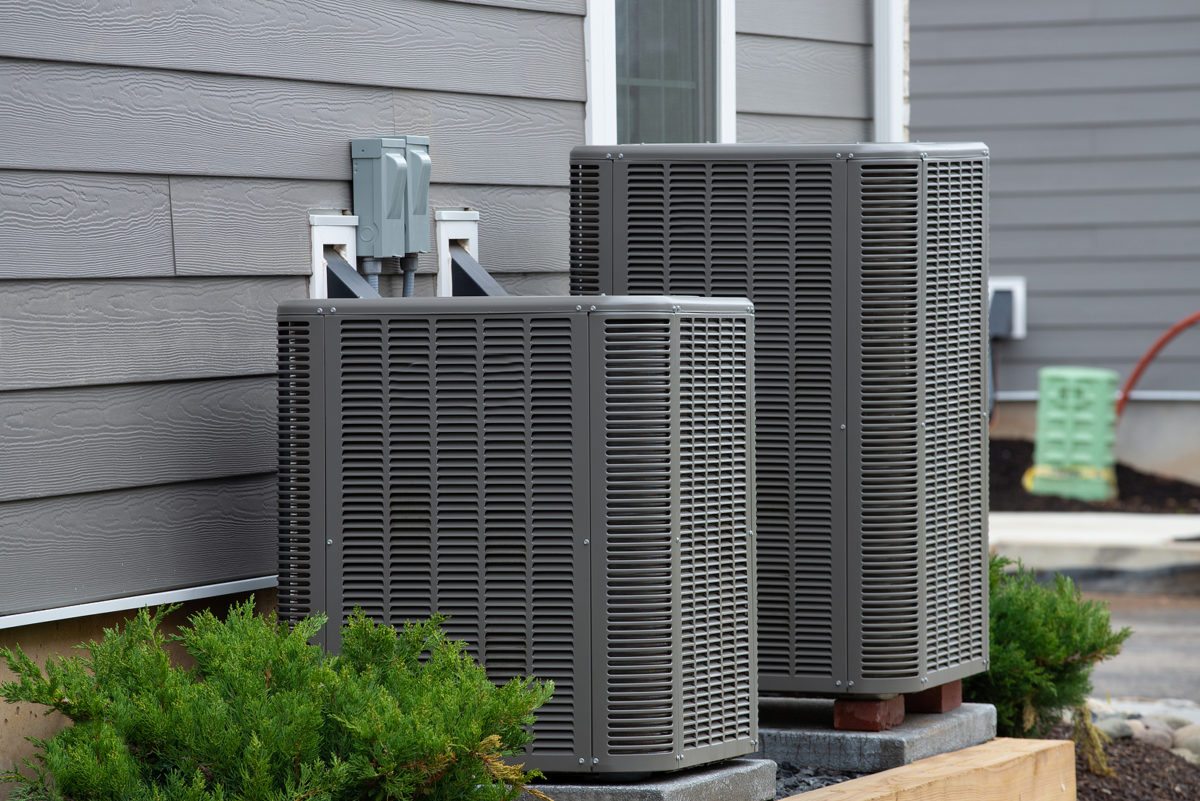
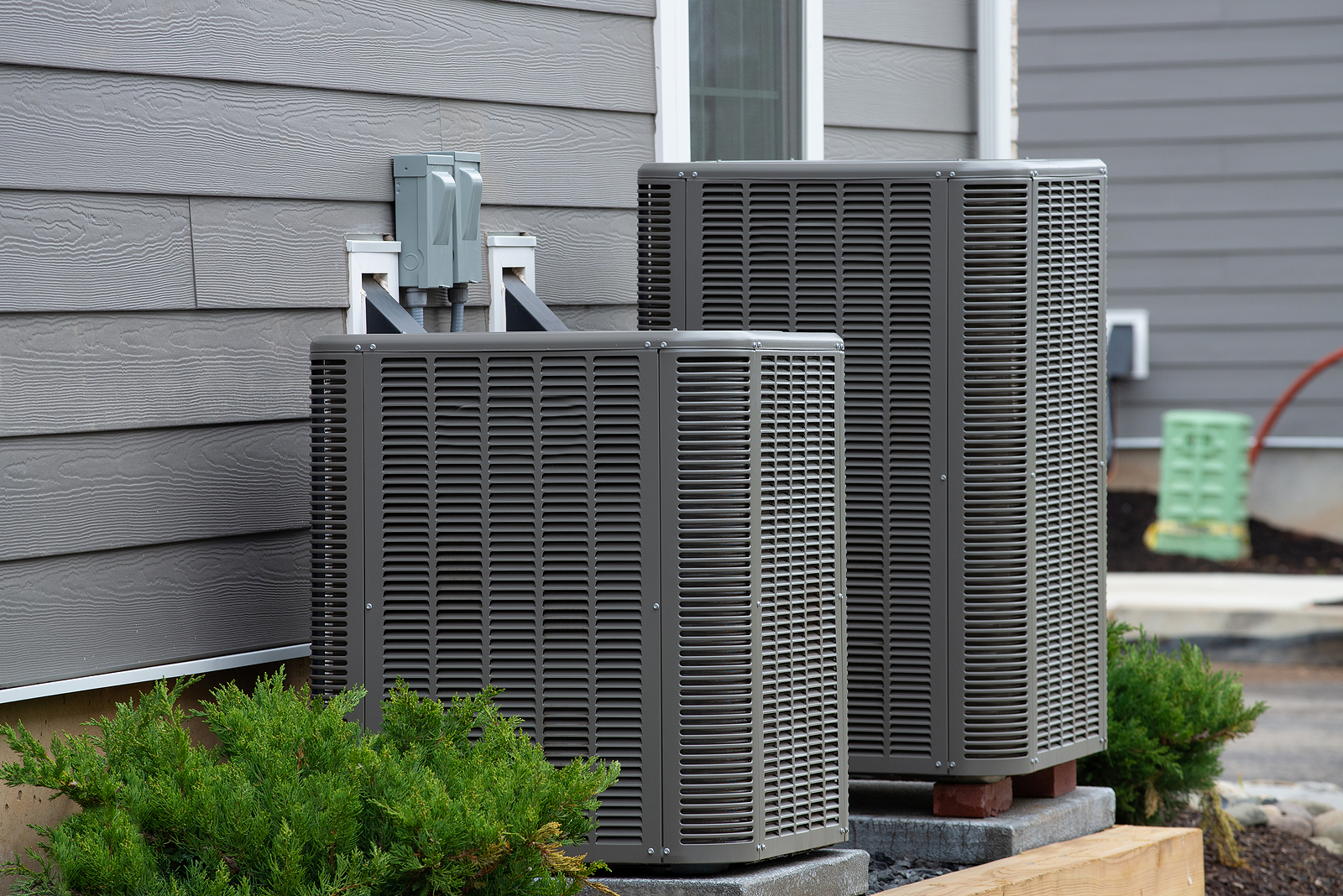
“An air conditioner’s filters, coils, and fins require regular maintenance for the unit to function effectively and efficiently throughout its years of service,” explain the experts at the U.S. Department of Energy (DOE)

“Neglecting necessary maintenance ensures a steady decline in air conditioning performance while energy use steadily increases.”

Researchers at homeadvisor.com suggest that you plan on spending between $75 to $200 for a “simple tune-up.”

Sounds crazy but …

Raise the thermostat on your AC system. “The smaller the difference between the indoor and outdoor temperatures, the lower your overall cooling bill will be,” claims our pro at the DOE.

Experiment with various temperature settings to find one that you can live comfortably with all summer. Seventy-eight degrees Fahrenheit while you are at home is what most of the pros recommend and 85 degrees if you’re leaving home and won’t return for at least four hours.

Need some incentive? You can realize a 1% to 3% savings on your energy bill for each degree higher that you set the AC system’s thermostat.

Wind chill in the summer?

Consider purchasing several circulating fans and using your ceiling fans. “These fans create a wind chill effect that will make you more comfortable in your home, even if it’s also cooled by natural ventilation or air conditioning,” say our friends at energy.gov.

Because they tend to amplify the feeling of cooler air, you may be able to bump that AC thermostat a notch or two higher.

In fact, the folks at energy.gov say that “If you use air conditioning to cool your home, a ceiling fan will allow you to raise the thermostat setting about 4°F with no reduction in comfort.” That’s money saved, right there.

Additional tips

  • Turn off the AC and open the doors and windows when the air outside is cooler than that inside the home.
  • Do some gardening. Shrubs and trees in the landscape not only help raise the value of your home, but, if placed strategically, they will shade the home, cooling it off naturally.

Clean energy company Constellation offers a list of ways to cool your home with strategic landscaping. Surprisingly, they claim that “The net cooling effect of a young, healthy tree is equivalent to 10 room-sized air conditioners that operate 20 hours a day” and “Just three trees, properly placed around a house, can reduce energy use by up to 30%.”

  • Consider installing window film and block-out curtains to keep the summer sun from heating up your home. The curtains are available at many retailers, including bedbathandbeyond.com, target.com and amazon.com.

Check out heat-blocking window film at homedepot.com, amazon.com and lowes.com.


Deciphering the mortgage process

For the first-time homebuyer, pursuing a home loan is a bit like visiting a foreign country where you don’t speak the language. Those who work in the industry tend to fling terms and acronyms around, expecting others to understand exactly what they’re talking about.

Have no fear, soon-to-be homeowner; we’ve created a handy glossary, of sorts, to help you out.

What exactly IS a mortgage?

“Mortgage” is an old French word that’s been in use since the turn of the 15th century. Once you learn the definition, we think you will never forget it:

“Mort” = “Dead”

“Gage” = “Pledge”

Sounds rather morbid, but the long-form definition is “… the deal dies either when the debt is paid or when payment fails,” according to the Online Etymology Dictionary.

We think it’s just a whole lot easier to think of it as a type of a loan, because, essentially, it is.

The people part of the mortgage

It’s easy to understand where all those mortgage fees to once you understand just how many people have their fingers in the pie.

Let’s get to know some of the players.

Mortagor/Mortgagee

When you borrow money for a mortgage, you become known as the “mortgagor.” The lender, on the other hand, is the “mortgagee.”

Mortgage Broker

This person is a middle-man or woman who shops among many lenders to help his or her clients find a mortgage that is right for them.

Loan Officer

Should you decide to go directly to a lender (your local bank, for instance), the first person you will be introduced to will most likely be the loan officer.

The loan officer will counsel you on the preapproval process and ensure that you turn over all the documents required to get moving on the loan.

Loan Processor

The loan officer will bundle up all that paperwork you completed and hand it over to the loan processor. This is the person who will check the paperwork for accuracy, verify your credit and make sure you aren’t fibbing about your income.

Once this process is complete, he or she will hand off the entire package to the underwriter.

Underwriter

The loan’s underwriter is the one person in the process that you’d like to be besties with.

This is the person who will determine how much of a risk the lender faces by lending money to you for a home.

The underwriter will do an analysis of everything, determining whether or not:

  • your application is complete and includes all documentation.
  • you are eligible for the loan.
  • you can afford to make the payments on the loan.
  • the home is worth what you’ve agreed to pay for it.

These are just some of the underwriter’s duties, but they are the most significant for you.

Appraiser

We mentioned above that the underwriter must ensure that the home is worth at least the amount you want to borrow. He or she does this by using a professional property appraiser.

Common mortgage terms

Amortization: “Mortgage amortization is a financial term that refers to your home loan pay off process,” according to the prose at Chase.com.

The payments on your loan will gradually change over the course of repayment to being those that pay for mostly interest to those that go toward primarily the principle.

You’ll find an easy explainer online at nerdwallet.com.

Closing Costs: Expenses incurred in financing the home. Closing costs vary and some are negotiable.

Escrow Impounds: You will be asked to prepay taxes and insurance when escrow closes. This money goes into an escrow account and is used to ensure the timely payment of these bills. The lender may require up to two months’ worth of payments to be impounded.

Principal: The amount you originally borrow.

PITI: An acronym for Principal, Interest, Taxes and Insurance. This is your monthly mortgage payment.

Point: What the lender charges for originating the loan. One point equals 1 percent of the loan amount.

Private Mortgage Insurance: Typically known as “PMI,” the borrower pays for this policy and the lender benefits if the borrower defaults on the mortgage.

With an FHA-backed mortgage, you’ll notice that this insurance is called “MPI,” short for mortgage insurance premium.

Mortgage insurance is required, generally, if the loan-to-value ratio is greater than 80%.


Could your dream home be the worst home in the neighborhood?

Times are tough for homebuyers with not enough homes on the market to absorb all of the folks who want to buy one. If you’re doing battle with the competition, and getting sick of it, have you considered buying a fixer?

Now. . .wait. . .don’t discard the notion until you hear what I have to say. You may just end up with the ideal home at an amazing price.

There is even a loan that will help you purchase and fix the home. So, basically, you can take that old beater of a home and customize it to your lifestyle. Before we get to that, though, let’s take a look at some of the other pros and cons of buying a fixer.

Advantages of buying a fixer

There’s an old saying in real estate that you should buy the worst home on the best street you can afford. The reason for this is that the market value of a particular home is based on the value of surrounding homes.

Location has a lot to do with the equation so if you buy the nicest home on a rundown street or neighborhood, your home will set the bar for the area’s market value. Buy the worst home in a desirable area, however, and its value is being propped up by the better homes and it has nowhere to go but up.

Deciding to buy a fixer also allows you to purchase in a better neighborhood than you could were you looking at turnkey homes for sale. These neighborhoods have homes that hold their value better than shabby or unpopular neighborhoods so your resale value will be better.

Then, because fixers are more challenging to sell, you may find a homeowner desperately seeking to get rid of one and more willing to negotiate on price.

Finally, there’s something to be said for not having to conform to a home that doesn’t have all the features you need. Buying and renovating a fixer allows the home to conform to you.

Disadvantages of buying a fixer home

The biggest and most obvious disadvantage in buying a home that needs repairs is all the work that will need to be done before you can live in it comfortably. Workers, dust, noise ― it’s all a hassle. But, in the end, most folks we’ve spoken with say that it’s worth it.

Additionally, the renovation process, especially if you use the loan program we suggest, is complicated, with lots of other people that you’ll need to coordinate.

Get your red-hot fixer loan here!

You have several financing options available when you decide to buy a fixer. All of them wrap the cost of fixing the home into the mortgage to purchase the property so you’ll have only one payment every month.

FHA 203(k) Rehab Mortgage – This program is restricted to borrowers who intend on living in the home.

Fannie Mae HomeStyle® Renovation Mortgage – This program is less restrictive, offering rehab loans to those who purchase a fixer as a second home or an investment to use as a rental (as long as it’s only one unit).

Freddie Mac CHOICERenovation® Mortgage – Like Fannie’s program, this one is less restrictive than the FHA program.

Not all lenders provide these loans, so give me a call and I’ll point you in the right direction.


3 home selling myths BUSTED!

Have you noticed that since you put the word out that you’re thinking of selling your home, everyone becomes a real estate expert? From your aunt Martha (who last sold a home in 1973) to your next-door neighbor, everyone has advice.

Read on for some of the biggest home selling myths perpetrated by these “experts,” and watch us bust them!

1. The online estimates of my home’s value are accurate

Nothing could be further from the truth. In fact, former Zillow CEO Spencer Rascoff once called their Zestimates merely “a good starting point,” according to the Los Angeles Times’ Kenneth R. Harney.

Rascoff went on to admit that Zestimates are off by about 8 percent, on average, but in some parts of the country the site’s error rate is drastically higher.

The only reliable method of determining a home’s true market value is by using local MLS statistics and only an appraiser or local real estate agent has access to these.

And, no, your home is not worth what you need to get out of it.

2. When pricing your home, price it high to start with

There’s a strange dichotomy in the real estate industry when it comes to overpricing a home: the seller very often ends up netting a lower-than-hoped-for price.

Sellers that overprice their homes aren’t fooling anyone. Buyers and their agents are fully aware of the price points in various neighborhoods and won’t waste their time on a home that is obviously overpriced.

What happens to these homes? They languish on the market, the listing becomes “stale,” and by the time the seller becomes realistic it is, sadly, too late.

Pricing a home appropriately for the market at the outset is critical to getting the home sold for the amount you want.

3. You don’t need a real estate agent to help you sell your home

This is partially true – you may be able to sell your home on your own. But, why would you want to?

If you think you’ll save money, think again. In 2020, the average sales price nationwide for a for-sale-by-owner (FSBO) home was $217,900, according to the National Association of Realtors.

The average sales price for a home sold with a real estate agent’s assistance sold for $242,300. That’s $24,400 more than a home sold by owner.

Additionally, selling a home requires marketing skills and, more importantly, a hefty marketing budget. It requires an understanding of contracts and the ability to negotiate. Plus, it will take a lot of your time – how much is that worth to you?

Old myths die hard, but we’re doing our best to help them along. Feel free to reach out to us with any questions about selling your home.

A new roof is expensive. Take care of the one you have

As a roof ages, problems with it are inevitable. Even new roofs, however, are susceptible to the forces of nature, whether they include high winds that send trees crashing down, ice dams or pelting hail.

Of course, these roof repair emergencies are unavoidable, but routine maintenance can help stop smaller problems from becoming catastrophic. The experts at HomeAdvisor.com suggest that most roof leaks stem from these common problems:

  • Inadequate roof pitch – low-slope or flat roofs are a bad choice in areas with lots of rain
  • Missing shingles – even heavy material can lift and blow away
  • Ice dams – Snow that melts and refreezes can build up, damming all the water behind it
  • Faulty step flashing – common in older roofs
  • Faulty pipe flashing – rain and snow can corrode the sealant, allowing moisture into the home
  • Valleys – these are the channels that carry rainwater and if they’re damaged, the water won’t flow

“Minor repairs range between $150 and $1,500,” according to Chauncey Crail and Lexie Pelchen at Forbes.com.

Bigger jobs, they go on to say, may cost anywhere from $1,500 and $7,000 and this cost doesn’t include that of any permits you may be required to obtain.

If the roof is beyond repair, plan on forking out “… between $5,434 and $11,151,” for a new one according to Meghan Wentland at Bobvilla.com.

Roof Emergency Prevention

No, you can’t prevent wicked weather, but take certain steps and you’ll prevent ancillary damage.

Roof maintenance is the “single most important factor (after proper installation) for determining the life span and cost of a roof system,” according to the National Roofing Contractors Association (NRCA). William Good, the group’s executive vice president adds that “too often, roofs are ignored until they leak — and often, at that point, they have to be completely replaced.”

Professional roofers offer these maintenance tips:

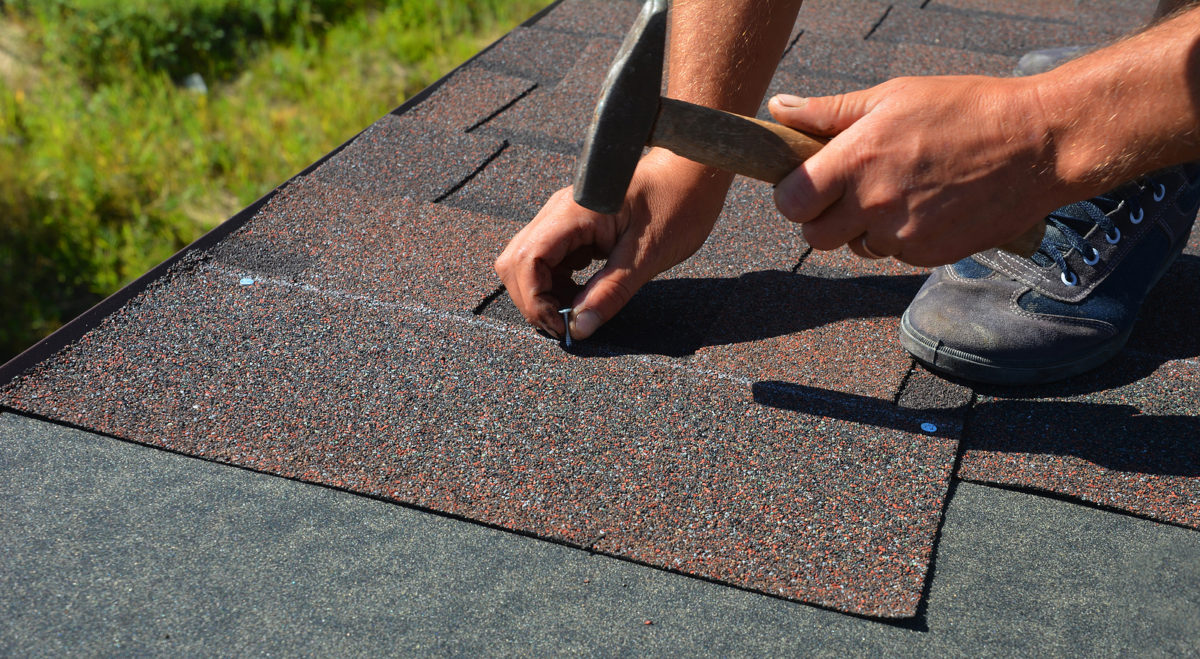
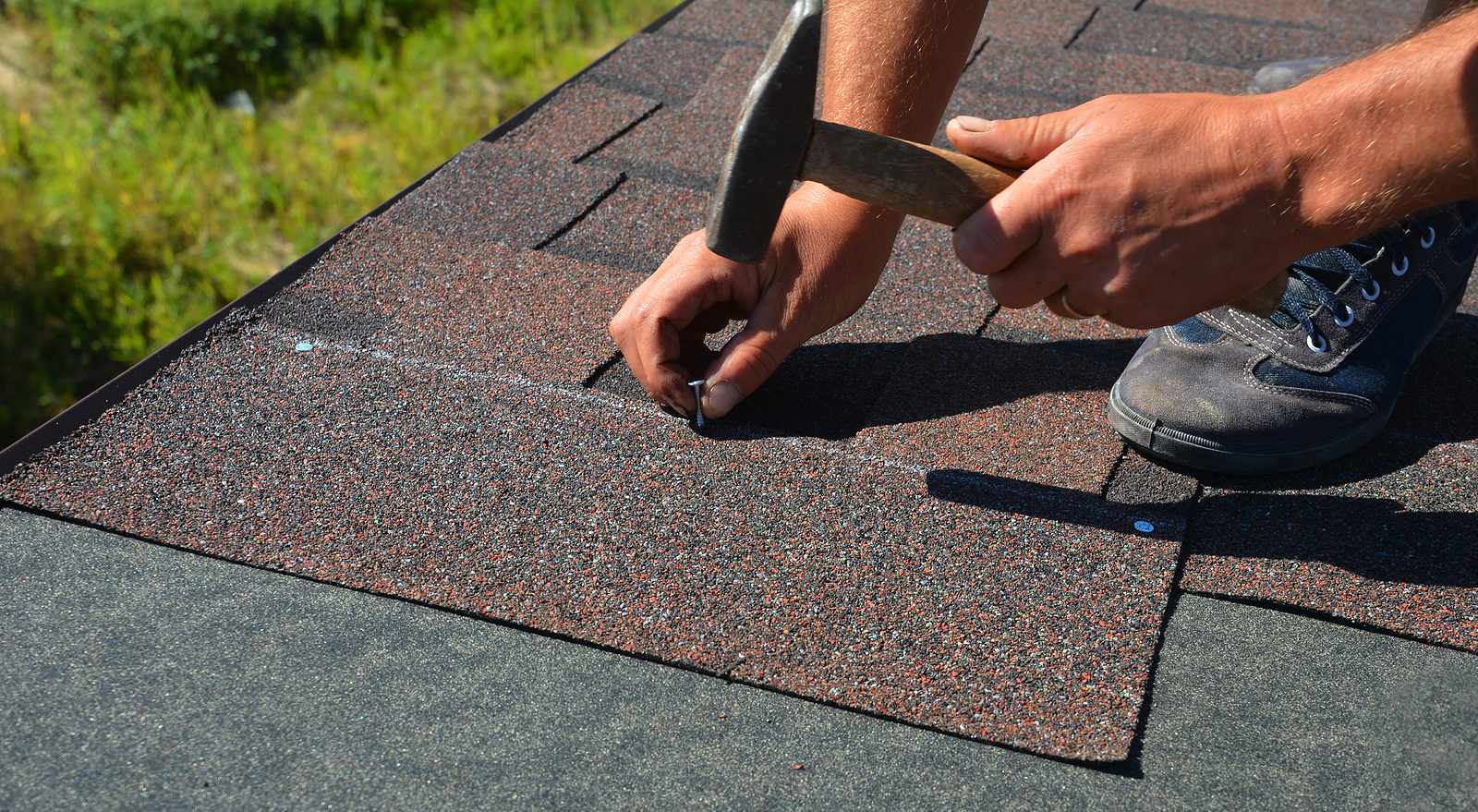
  • Inspect your roof twice a year, in fall and spring. Look closely at the shingles to ensure none are buckled, curled, cracked or missing. These need to be replaced immediately.

Then, inspect the area around the chimney, pipes and anything else that is attached to and extends from the roof. Look for looseness or wear.

Finally, when you clean the gutters, look for large amounts of shingle granules that have been blown off or worn away from the shingles. These granules add weight to the shingles and finding large amounts in the gutters is a sign that some of the shingles may need to be replaced.

  • Inspect the ceiling in the attic, looking for signs of moisture intrusion. These include a musty odor, mold and damp insulation.
  • Cut back tree branches that extend to within 6 feet of your roof.
  • Routinely remove leaves that fall on the roof. These trap moisture and may rot the roofing material beneath them, according to Werner & Sons Roofing in Grand Haven, MI.

No, the inspection doesn’t sound like fun. But, trust us, it’s a lot more fun than writing a check for the cost of a new roof.

Why is my smoke detector making noise?

Did you know that your chance of dying in a home fire is cut by 55% if the home contains working smoke alarms? According to the National Fire Protection Agency, maintaining the smoke alarm in your home is critical.

Pay attention if the unit beeps or chirps for no apparent reason. Typically, the batteries are dead and need to be replaced. When it’s a hardwired alarm that’s driving you nuts with noises, you’ll need to investigate the cause.

How old is the smoke detector?

The average life span of a smoke alarm is 10 years. If yours is older, it may be chirping to let you know it’s time to replace the entire unit.

There should be a date stamped on it somewhere, sometimes on the back of the unit so you may need to remove it from the ceiling. If it’s older than 10 years, buy a new one.

Dirt and grime are the enemies

Smoke detectors require routine cleaning to remain reliably operable. As well, “Most people don’t realize that the batteries should be replaced TWICE a year,” according to the cleaning pros at maidbrigade.com.

They go on to suggest that an easy way to remind yourself to perform this task is to plan on doing it when “… we change to daylight savings time and daylight standard time.”

You’ll not only want to change the batteries, but clean and test the smoke detector unit as well.

If the detector’s sensor is covered in dust or grime, the noise it’s emitting may be trying to alert you that it needs to be cleaned.

The best way to do this, if it’s just a film of dust, is with compressed air such as that you use to clean your computer.

If it’s grime that is causing the problem, use a microfiber cloth to wipe it clean.

You’ll find a walkthrough of how to clean a smoke alarm online at kidde.com.

Power outage

Even a momentary power outage can cause the smoke detector to chirp. It may also be chirping in response to a power surge. A professional electrician is required to remedy this problem.

When your smoke detector begins chirping, don’t ignore it and don’t put off investigating the cause. The detector is an important safety feature in the home so its maintenance requires immediate attention. If you can’t determine the reason for the chirping, call the manufacturer for assistance.

Additional smoke detector considerations

Safety experts suggest (and some state laws demand) that homes have working smoke detectors on each level of the home and in each hallway and bedroom.

Ceiling mounted detectors should be placed 4 inches from the wall and, “If your alarms are on the wall, they should be 4 to 12 inches from the ceiling,” according to the experts at the Texas Department of Insurance.

They also caution against placement near windows and vents and in areas with lots of drafts.

It may be challenging to figure out why a smoke alarm is all of a sudden making noise. If all else fails, replace the alarm. They aren’t terribly expensive and the peace of mind it will provide is well-worth the price.

You’ll find more help in figuring out why your alarm is chirping online at bobvilla.com.


Do I have to include my appliances in the home sale?

This is a question we hear frequently and the answer is: it depends.

On what?

On whether or not the appliance is considered personal property or a fixture.

What’s the difference between personal property and a fixtures?

The former includes anything that is not permanently affixed to the home and can be removed without damaging the structure. Examples of personal property include:

  • Most refrigerators, washers and dryers
  • A range that isn’t built in to the cabinetry
  • Outdoor potted plants
  • Furniture
  • Tools
  • Curtains and draperies

A fixture, on the other hand, is anything that is permanently attached to the property or structures on the property and to remove them would cause damage to the home. Fixtures include:

  • A built-in microwave, dishwasher or range.
  • Toilet
  • Chandelier that is hardwired into the ceiling
  • In-ground plants
  • Ceiling fan
  • Plantation shutters and blinds on the windows

What is and what is not a fixture confuses many homebuyers and sellers. There are several “tests” you can perform to separate personal property from fixtures.

  • How is the item attached to the home? “Use of nails, bolts, cement or glue indicates permanent attachment,” according to Robert J. Bruss at com.
  • The item was installed explicitly for the property. Wall-to-wall carpet is an example.

If in doubt about anything, however, ask your listing agent.

There is a way to get around this

You and the buyer can agree to include or exclude a fixture from the sale as long as the wishes are stated in the agreement and agreed to by both parties.

For instance, the seller wants to remove the dining room chandelier, as it belonged to his grandmother and he has a sentimental attachment to it. He can either remove and replace it before the home goes on the market (the smartest move) or try to get the buyer to agree to exclude it from his or her purchase of the home.

As mentioned earlier, the best course of action is to remove and replace any fixtures you want to take with you when you move.

Before you put your home on the market, take a tour of the interior and the exterior and remove anything that you don’t want to sell with the home that might be considered a fixture.

It is important to do this before buyers visit the home.

Consider each fixture carefully and, should you decide to take it with you, consider the cost to replace and install another. For example, expensive ceiling fans are often removed and replaced with another.

Another common fixture that sellers remove are certain landscape plants that they value. Since they’re fixtures when planted in the ground, get them dug up and into a pot before showing the home to buyers.

Again, removing and replacing items must be done before showing the home to potential buyers. If you have any doubts as to whether or not an item is a fixture, please ask. We’re happy to help.

The home shopping wish list for families

If money wasn’t a part of the equation, what’s the one feature you absolutely have to have in your new home?

What is the one feature of your current home that you can’t wait to dump?

Finding the answers to these questions is the best place to start when creating a home wish list.

And, yes, you most certainly should make a list. Just as it isn’t wise to go grocery shopping without a list, shopping for a home without understanding your priorities is a waste of time and, down the line, you may be very sorry.

The problem families run into, as opposed to couples and singles, is that very often priorities differ. That’s when compromise comes into play.

Let’s take a look at the wish list, how to compile it and how to approach compromises.

The perks of having a home shopping wish list

As you’ve no doubt heard, the real estate market is moving fast. Knowing how to eliminate a particular home or to jump on one, is key.

The wish list will accomplish this and keep you on track and ready to make an offer when the right home comes along.

Another advantage of taking the time to compile a list is that it will help the family hammer out comprises before entering the market. Again, speed is king right now, so prioritizing what you can’t live without and making compromises before shopping will help immeasurably.

The wish list roundtable

Gather the family, however large or small, to brainstorm what each considers the perfect home.

Ask each person to make a list of what they don’t like about your current home. What will they be grateful to leave behind?

If anyone is having trouble with this, do an actual walk-through of the home, starting at the front door. You’d be surprised at the ‘aha moments’ you’ll encounter in this exercise.

Even small annoyances should go on the list as they will be whittled down during later steps in the process.

Next, ask each family member what aspects of your current home they will miss the most.

For instance, the backyard is the family gathering spot all summer long, something they look forward to all year. A suitable backyard would therefore be something they don’t want to forego in a new home.

Time to compromise

We suggest that you refine your lists by using a scale of one to five or one to 10 to rank each item.

Those scored with a one or two ranking are considered as “would-be-nice-to-have,” whereas something ranked nine or 10 are must-haves and therefore “deal-killers” if not present in the new home, according to Tara-Nicholle Nelson at businessinsider.com.

Everything ranking in between the two extremes is negotiable.

For example, your partner longs for a walk-in pantry, yet ranks it at three on the scale. The longing is obviously not deep and is something he or she may be willing to compromise on.

Naturally, what Mom and Dad need in a home will trump what small children think they need. But it’s important to get buy-in from all family members.

The biggest challenges come up when the two adults want wildly different things in a new home. This is where the prioritization method, mentioned previously, comes into play.

Although a wish list isn’t set in stone and may change along the way, it’s important to get clear on what each family member is willing to subject to compromise and what items are must-haves.


s1