The Big Brokerage Shuffle: How Brokerage Consolidation Impacts Agents and Clients

The real estate industry is in the middle of a major reshuffle, and it is not happening quietly. Brokerage consolidation has become one of the most influential forces shaping how agents work and how consumers choose representation. As national brands merge, acquire competitors, and streamline operations, the ripple effects are being felt across every level of the market. In this blog, we will break down why consolidation is accelerating, how it affects agents and clients differently, and what it means for the future of real estate in the US.

Why Consolidation Is Accelerating Across Real Estate

The pace of change in real estate has picked up significantly since 2022. Rising interest rates, lower transaction volume, and higher operating costs have put pressure on brokerages of all sizes. Technology investments alone have become a major expense, as consumers now expect seamless digital experiences, fast communication, and transparent data throughout the transaction.

At the same time, commission structures are under closer scrutiny. Updated rules, increased consumer awareness, and tighter margins have made scale more attractive to large firms looking to protect profitability. Brokerage consolidation allows these companies to spread costs across wider networks while strengthening their negotiating power, technology platforms, and national presence.

What Consolidation Means for Small Brokerages and Independent Agents

Despite the growth of large national brands, independent brokerages are far from disappearing. In fact, consolidation has made differentiation more important than ever. Smaller firms often compete on personal service, deep local knowledge, and direct access to leadership. Many clients still value working with an agent who knows the neighborhood, understands local pricing nuances, and can move quickly without layers of approval.

Flexibility is another advantage. Independent brokerages can adapt their business models faster, adjust fee structures, and tailor marketing strategies without corporate restrictions. When used effectively, these strengths allow small firms to remain competitive even as brokerage consolidation reshapes the broader landscape.

Life Inside a Large Brokerage After a Merger

For agents working inside large firms, consolidation brings both opportunity and adjustment. On the positive side, agents may gain access to advanced technology, larger referral networks, and standardized systems designed to improve efficiency. These tools can be especially appealing to newer agents who benefit from structure and support.

However, not every agent thrives in a large system. Some feel their personal brand becomes secondary to the company brand, while others experience reduced autonomy over marketing and client communication. Agents who have not already built their own audience or visibility may feel more dependent on corporate systems than they prefer. The impact of brokerage consolidation inside big firms often depends on whether an agent values scale or independence more.

 

How Buyers and Sellers Experience the Shift

Consumers are also navigating what consolidation means for their transactions. Large brokerages often offer consistent processes, robust technology platforms, and access to broader data sets. This can create smoother experiences, especially for clients who value efficiency and standardized communication.

Smaller firms, however, frequently deliver more personalized service. Clients may work directly with the same agent throughout the entire process, receive quicker responses, and benefit from hyper-local expertise. For many buyers and sellers, trust and communication still outweigh brand recognition. Even as brokerage consolidation continues, the agent-client relationship remains the most important factor in a successful transaction.

Staying Competitive in a Consolidated Market

The agents and brokerages that succeed long term are the ones that focus on clarity and value. A recognizable personal brand, consistent communication, and strong community involvement help agents stand out regardless of brokerage size. Investing in the right technology supports efficiency, but the client experience ultimately determines referrals and repeat business.

Consolidation is not eliminating opportunity. It is redefining it. Large firms will continue to grow through mergers and acquisitions, while independent agents and brokerages grow through trust, agility, and connection. For clients, the decision still comes down to the professional guiding them, not the logo behind the name.
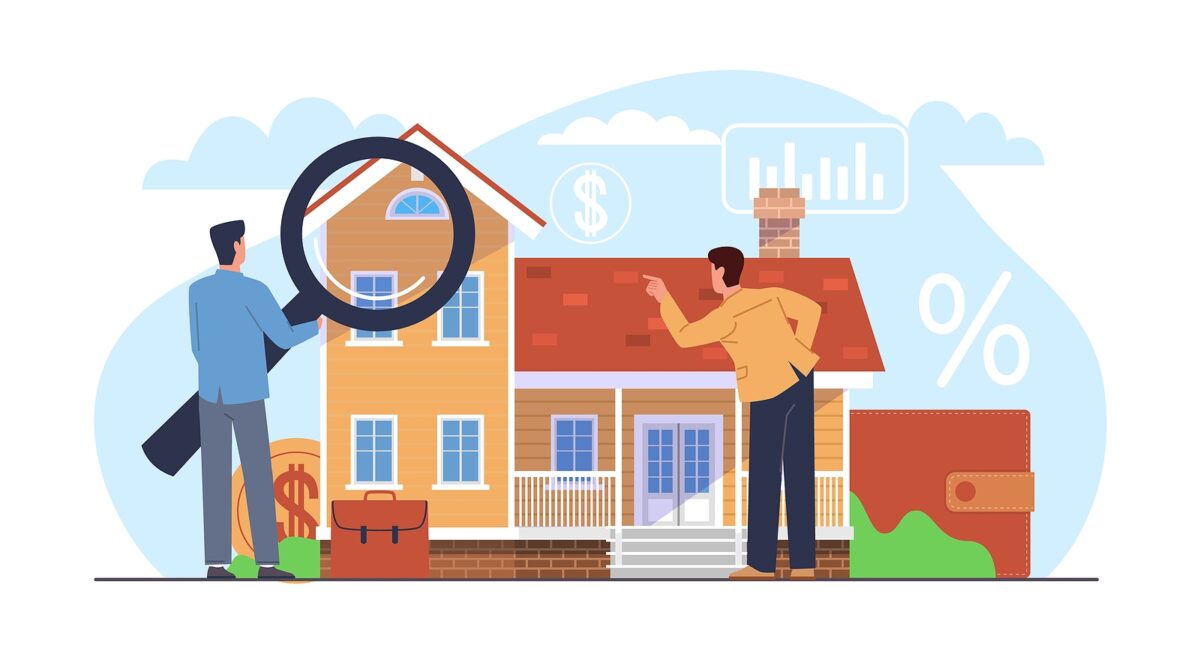

The Pitfalls of Automated Home Values: Why They Often Get it Wrong

In today’s digital age, homeowners and prospective buyers have easy access to a wealth of information regarding real estate. Automated home valuation tools like Zillow’s Zestimate have become increasingly popular for estimating property values. However, these tools are far from infallible and often generate inaccurate estimates.

Sadly, most real estate consumers don’t understand this, leading to overpricing of homes.

In this blog post, we will explore why automated home values are frequently wrong and shed light on the factors on which websites like Zillow base their Zestimates.

Lack of human oversight

One of the primary reasons why automated home values often miss the mark is the absence of human oversight. These valuation tools rely on algorithms and data-driven models to estimate property values, disregarding the subjective factors that can significantly impact a home’s worth.

Automated systems often overlook the home’s unique features, renovations, neighborhood dynamics, and local market conditions. Consequently, this leads to inaccurate estimates, as algorithms fail to capture the full complexity of the housing market.

Insufficient data accuracy and completeness

Automated home valuation tools rely on vast amounts of data to generate estimates. Websites like Zillow aggregate data from various sources, including public records, tax assessments, and previous sales data. However, the accuracy and completeness of this data are not always guaranteed.

The most reliable information comes from an area’s Multiple Listing Service, to which Zillow doesn’t subscribe. Instead, the company relies on information submitted by real estate agents across the country, but not all real estate agents advertise on Zillow. Therefore, the important stuff doesn’t make it into the automated home value.

Then, there are real estate agents (who are required by their MLS to update their listings on that platform within a certain time period) who aren’t held to the same stringent rules.

They often neglect to update listing information on automated home value websites, causing information to become outdated. There’s nothing more frustrating than finding your dream home for sale on Zillow only to learn that it sold a week ago.

Inability to account for unique features and upgrades

Automated valuation tools struggle to account for the unique features and upgrades that differentiate one property from another. This is something a professional appraiser will not miss, by the way.

They often rely on general characteristics of similar homes in the area, failing to consider specific details that can significantly impact a property’s value. Features like a remodeled kitchen, a swimming pool, or a picturesque view can dramatically affect a home’s worth but are challenging for automated systems to accurately assess. Consequently, these tools may undervalue or overvalue a property, leading to misleading estimates.

Ignoring local market dynamics

Real estate markets are dynamic and can vary significantly from one location to another. Automated valuation tools, however, often fail to consider the intricacies of local markets.

They rely on broader market trends and regional averages, which may not accurately reflect the nuances of a specific neighborhood or city. Factors like school district quality, nearby amenities, transportation infrastructure, and local economic conditions can all influence property values, but they are difficult for automated systems to incorporate.

Consequently, estimates may not align with the reality of the local market, leading to erroneous valuations.

Lack of contextual understanding

Another inherent limitation of automated home valuation tools is their inability to accurately comprehend a property’s context. They fail to consider subjective factors such as curb appeal, architectural style, and overall condition.

The emotional appeal of a property, which can significantly impact its value, is challenging for algorithms to gauge. On the other hand, human appraisers can and do, recognize and factor in these nuanced elements when determining a property’s worth, providing a more comprehensive and accurate assessment.

While automated home valuation tools offer convenience and quick estimates, they are prone to significant inaccuracies.

It is crucial for homeowners and prospective buyers to approach automated home values with caution and rely on them as a starting point rather than a definitive measure of a property’s worth. For a more accurate appraisal, engaging the services of a local real estate agent is important if you hope to obtain the most money possible for your home.