
Why Buyers Are Paying for Ease, Not Projects


A lot of sellers still think buyers will do what buyers used to do.

They think someone will walk into the house, notice the dated paint, the worn flooring, the older fixtures, the overstuffed rooms, the tired landscaping, and tell themselves it is all fine because they can fix it later. Sellers still lean on the same phrases all the time. Good bones. Great potential. Cosmetic only. Easy updates.

The problem is that potential sounds different when money is tight.

A few years ago, buyers were more willing to stretch. They were more willing to overlook things because inventory was brutal, rates were lower, and the pressure to just win a house was stronger than the pressure to think it through. A lot of people bought homes knowing they would deal with the rough edges later because later still felt manageable.

Today, buyers walk into a house and start doing a different kind of math. They are not just asking whether the home fits their budget on paper. They are asking how much work this house is going to ask from them after they close. They are asking whether the home feels like a clean move or a running tab. They are asking whether they are buying one payment or buying the payment plus paint, flooring, lighting, landscaping, repairs, and the growing list of things they will have to handle once the keys are theirs.

That is why buyers are paying for ease, not projects.

Ease does not mean brand new. It does not mean every kitchen has to be remodeled and every surface has to sparkle like a magazine spread. It means the house does not immediately feel like another problem to solve. It means the home feels cared for. It feels clear. It feels manageable. It feels like a place someone could move into without spending the first six months catching up to what the seller ignored.

That is a very different kind of value than a lot of sellers are used to thinking about.

This is where sellers get off track. They focus on what they have gotten used to instead of what a buyer is experiencing for the first time. The seller knows the drip under the sink is minor. The seller knows the carpet has “a few years left.” The seller knows the old paint color never bothered them. The seller knows the garage clean-out never happened because life got busy.

They see a house that feels clean or one that feels neglected. They see a home that feels simple or one that feels like it will keep asking for money. They see whether the seller took care of what was visible, and then they make assumptions about everything they cannot see yet.

That is what sellers need to understand. Buyers are not reacting to one issue. They are reacting to the pileup.

One scuffed wall is nothing. One broken blind is nothing. One outdated light fixture is nothing. But stack enough little things together and the house starts feeling heavy. It stops feeling like a home and starts feeling like a project list. Once that happens, buyers do not just notice flaws. They start protecting themselves from them.

A house can be listed at a number that seems fair on paper and still feel overpriced in person if it looks like it comes with extra work. Sellers miss that all the time. They think pricing is only about square footage, bedrooms, neighborhood, or what another house sold for. Buyers are looking at something more immediate. They are asking whether this house feels worth the number attached to it.

That answer gets shaped by condition a lot faster than sellers want to admit.

The homes getting the strongest response right now tend to do one thing well. They make the next step feel easier. They do not ask the buyer to forgive too much. They do not force the buyer to mentally budget for ten fixes before they even get to the second bedroom. They do not rely on charm to carry deferred maintenance. They do not rely on “vision” to carry clutter, bad lighting, sloppy presentation, or an obvious lack of prep.

They reduce resistance.

That is why the simple work matters so much. Clean the place properly. Clear out the clutter. Fix the little things. Improve the lighting. Make the rooms make sense. Stop giving buyers reasons to hesitate before they have even reached the kitchen. None of that is flashy, but all of it changes the tone of the showing.

The goal is not to create perfection. The goal is to stop creating drag.

That is the difference between a house buyers have to talk themselves into and one they can see themselves buying without a long internal debate. Sellers who understand that usually make better decisions before they list. They stop spending money in the wrong places. They stop assuming buyers will see what they see. They stop leaning on potential and start paying attention to what feels easy.

That matters because the market has changed in a very practical way. Buyers have more ability to compare than they did during the tightest inventory years, and affordability pressure has made them much more sensitive to anything that feels like added cost. When buyers feel squeezed, they do not pay extra for future projects. They pay for homes that feel like the work has already been done well enough for them to breathe.

That is the shift.

And sellers who understand it are going to have a much easier time getting attention, holding leverage, and making their home feel worth the price the moment buyers walk in.


Sellers Are Not Competing With the Market. They Are Competing With Buyer Caution.


A lot of sellers still think the biggest challenge is the market itself.

They assume rates are the problem, buyer hesitation is the problem, or headlines are the problem. Those things all matter, but they are not the full story. The bigger issue for many sellers right now is much simpler. Buyers are more cautious, more selective, and less willing to absorb someone else’s pricing mistake or unfinished to-do list.

In this market, sellers are not competing with last year’s frenzy or with the story they tell themselves about what their home should bring. They are competing with buyer caution. They are competing with every other home a buyer can look at online in the same price range. They are competing with the monthly payment a buyer is already nervous about. They are competing with the feeling buyers get when they walk through the front door and decide whether this house feels easy or expensive.

The numbers back that up. The National Association of Realtors reported that existing-home sales rose in May 2026 to a 4.17 million annual pace, and inventory climbed to a 4.5-month supply. Pending home sales also increased in May. That means buyers are still active, but sellers are working in a market with more options and more comparison than they had during the tightest years. Homes are still moving, but they are not being dragged across the finish line by pure urgency anymore. (NAR Existing-Home Sales, June 2026) (NAR Pending Home Sales, June 2026)

That is where a lot of sellers lose the plot.

Successful real estate agent in a suit holding for sale sign near new apartment. Real estate agent with home loan contract, selling home. Realtor or real estate agent shows board for sale.

They think more inventory only matters in a broad market sense. It does not. It matters at the individual listing level. A buyer looking at your house is not comparing it to some national chart. They are comparing it to the other homes they can actually buy this week. If your home feels overpriced, harder to own, darker, more cluttered, or more work than the alternatives, buyers do not always step in and negotiate. A lot of them just keep scrolling.

That is the real risk.

This is why pricing has become less forgiving. Altos Research has been tracking weekly inventory, price cuts, and market softness for a long time, and one of the clearest takeaways in the current environment is that inventory has normalized significantly from the ultra-low-supply period. More homes on the market means buyers have more room to compare and less reason to chase a listing that feels out of line. (Altos Research Market Reports)

That does not mean sellers need to underprice their home. It means they need to stop confusing optimism with strategy.

A home priced correctly in a more selective market can still create momentum. A home priced too high usually burns its strongest attention window and trains buyers to wait for a reduction. Once that starts happening, the conversation changes. Buyers stop asking whether they should move quickly and start asking what is wrong with the house.

Condition matters just as much. Cotality’s June 2026 home price analysis pointed out that higher mortgage rates disrupted the spring market and reversed some affordability gains. That matters for sellers because affordability pressure makes buyers more sensitive to visible work. When the payment already feels high, buyers become less tolerant of a home that also needs paint, flooring, fixtures, repairs, or heavy cosmetic cleanup. (Cotality Home Price Insights, June 2026)

That is why the homes performing best right now are not always the ones with the biggest remodel budget. They are often the homes that feel the easiest to step into. Clean. Bright. Well-maintained. Clearly priced. Easy to understand. Easy to imagine living in without immediately opening another spending tab in your head.

That is what buyers respond to.

Harvard’s Joint Center for Housing Studies has also been clear that affordability pressure remains a defining issue in housing. When households are stretched, they do not just become price-sensitive. They become friction-sensitive. They pay closer attention to every sign of deferred maintenance, every awkward room, every over-personalized finish, and every detail that suggests more work after closing. (Harvard JCHS affordability coverage)

This is why sellers need to stop asking, “How high can I push this?” and start asking, “How easy have I made it for the right buyer to say yes?”

That is a much better question.

It leads to better decisions. It leads to stronger preparation. It leads to better pricing. It leads to a launch that actually gives the listing a chance to create momentum instead of wasting the first two weeks proving that the seller missed the market. And right now, that is the difference.

The sellers who are doing best are not the ones hoping the market will excuse bad pricing, weak photos, visible neglect, or a half-ready house. They are the ones who understand that buyers are active, but cautious. They know they have to compete for attention and confidence. They know the house has to feel worth the payment buyers are carrying in their heads.

Not chasing the fantasy number. Not leaning on old assumptions. Not waiting for buyers to lower their standards.

good deal vs bad deal

Just making the home feel like the easiest, clearest, strongest option in its lane.

That is what wins right now.

The 8 Seconds You’ll Love a Home

Find the home you love in 8 seconds you know

When buyers walk into a property for the first time, something interesting happens.

Within moments, they already know how they feel about it.

That first reaction often takes less than ten seconds. It happens before they see every room. Before they look at square footage. Before they think about resale value.

Those first few seconds shape everything that follows.

This is what people mean when they talk about the 8 seconds you’ll love a home. It is the moment your brain decides whether the space feels right or wrong.

That reaction is not random.

It is influenced by first impressions, layout, light, and something harder to measure — instinct.

When buyers step through the front door, their senses go to work immediately. They notice light levels, the openness of the space, the temperature, the smell, and the overall atmosphere. These details form a quick emotional picture before logic has time to catch up.

That is why the 8 seconds you’ll love a home often feel so powerful. Emotion arrives before analysis.

One of the biggest drivers of that first impression is layout. Buyers respond quickly to how a home flows from one space to another. If the entry feels cramped, confusing, or blocked, it creates hesitation. If the layout feels open and intuitive, people relax.

Flow matters more than size.

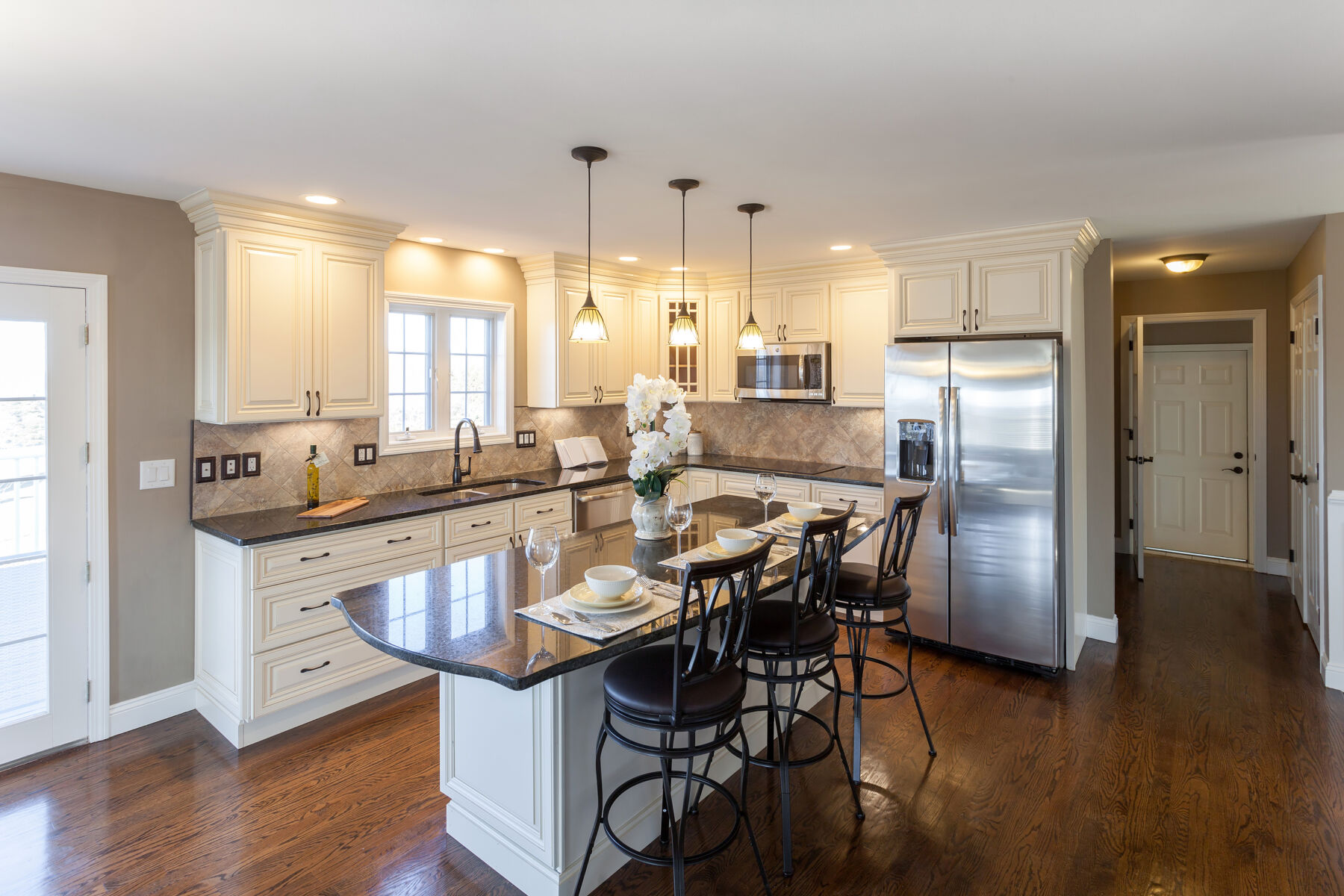
Beautiful staged kitchen room in a modern house with granite countertops and antique finished cabinets.

Two homes with the same square footage can feel completely different depending on how the rooms connect. A well-designed layout allows people to move naturally through the space without thinking about it. When movement feels easy, the home feels comfortable.

That comfort often shows up during the 8 seconds you’ll love a home.

Light is another major factor. Natural light has an immediate effect on mood and perception. Bright spaces feel larger, cleaner, and more welcoming. Dark spaces can feel smaller and heavier even if the dimensions are the same.

Buyers may not consciously say, “This home has good light,” but their reaction reflects it.

Sunlight through windows, balanced lighting, and clear sightlines all contribute to that first emotional response. When a space feels bright and open, buyers often want to keep exploring.

That initial curiosity starts in the 8 seconds you’ll love a home.

Clutter also plays a role. When a home is crowded with furniture, personal items, or visual distractions, buyers struggle to understand the space quickly. Their attention goes to objects instead of the layout.

Clean, simple rooms allow buyers to absorb the home itself.

That clarity makes a strong first impression because it helps buyers imagine their own life in the space. When people can picture themselves living there, the emotional connection grows.

And emotional connection is what drives most home decisions.

Buyers often think they are evaluating homes purely with logic. Price, size, location, and condition all matter. But those factors usually come after the emotional reaction.

First the brain asks, “Do I like this?”

Then it asks, “Can I make this work?”

The 8 seconds you’ll love a home happen before any spreadsheets or mortgage calculations enter the conversation.

This gut reaction is not always perfect, but it is powerful. Many buyers remember the exact moment they walked into the home they eventually purchased. Something about the space felt right.

Sometimes it is the light. Sometimes it is the layout. Sometimes it is the feeling of calm or possibility.

Those reactions are difficult to quantify, but they influence decisions more than people realize.

This is also why first impressions matter so much when selling. Buyers form an opinion quickly, and once that opinion forms, it tends to stick. A strong first impression creates curiosity and excitement. A weak one can make buyers mentally move on before seeing the full home.

Understanding the 8 seconds you’ll love a home helps buyers recognize why certain properties stand out. It also helps sellers understand why preparation and presentation matter.

Homes that feel open, bright, and easy to understand create better first impressions.

That first moment sets the tone for everything that follows.

When the initial feeling is positive, buyers begin imagining possibilities. They notice features instead of flaws. They picture where furniture might go. They begin to see themselves living there.

And often, that entire process begins in the first few seconds after the door opens.