Why Buyers Are Paying for Ease, Not Projects


A lot of sellers still think buyers will do what buyers used to do.

They think someone will walk into the house, notice the dated paint, the worn flooring, the older fixtures, the overstuffed rooms, the tired landscaping, and tell themselves it is all fine because they can fix it later. Sellers still lean on the same phrases all the time. Good bones. Great potential. Cosmetic only. Easy updates.

The problem is that potential sounds different when money is tight.

A few years ago, buyers were more willing to stretch. They were more willing to overlook things because inventory was brutal, rates were lower, and the pressure to just win a house was stronger than the pressure to think it through. A lot of people bought homes knowing they would deal with the rough edges later because later still felt manageable.

Today, buyers walk into a house and start doing a different kind of math. They are not just asking whether the home fits their budget on paper. They are asking how much work this house is going to ask from them after they close. They are asking whether the home feels like a clean move or a running tab. They are asking whether they are buying one payment or buying the payment plus paint, flooring, lighting, landscaping, repairs, and the growing list of things they will have to handle once the keys are theirs.

That is why buyers are paying for ease, not projects.

Ease does not mean brand new. It does not mean every kitchen has to be remodeled and every surface has to sparkle like a magazine spread. It means the house does not immediately feel like another problem to solve. It means the home feels cared for. It feels clear. It feels manageable. It feels like a place someone could move into without spending the first six months catching up to what the seller ignored.

That is a very different kind of value than a lot of sellers are used to thinking about.

This is where sellers get off track. They focus on what they have gotten used to instead of what a buyer is experiencing for the first time. The seller knows the drip under the sink is minor. The seller knows the carpet has “a few years left.” The seller knows the old paint color never bothered them. The seller knows the garage clean-out never happened because life got busy.

They see a house that feels clean or one that feels neglected. They see a home that feels simple or one that feels like it will keep asking for money. They see whether the seller took care of what was visible, and then they make assumptions about everything they cannot see yet.

That is what sellers need to understand. Buyers are not reacting to one issue. They are reacting to the pileup.

One scuffed wall is nothing. One broken blind is nothing. One outdated light fixture is nothing. But stack enough little things together and the house starts feeling heavy. It stops feeling like a home and starts feeling like a project list. Once that happens, buyers do not just notice flaws. They start protecting themselves from them.

A house can be listed at a number that seems fair on paper and still feel overpriced in person if it looks like it comes with extra work. Sellers miss that all the time. They think pricing is only about square footage, bedrooms, neighborhood, or what another house sold for. Buyers are looking at something more immediate. They are asking whether this house feels worth the number attached to it.

That answer gets shaped by condition a lot faster than sellers want to admit.

The homes getting the strongest response right now tend to do one thing well. They make the next step feel easier. They do not ask the buyer to forgive too much. They do not force the buyer to mentally budget for ten fixes before they even get to the second bedroom. They do not rely on charm to carry deferred maintenance. They do not rely on “vision” to carry clutter, bad lighting, sloppy presentation, or an obvious lack of prep.

They reduce resistance.

That is why the simple work matters so much. Clean the place properly. Clear out the clutter. Fix the little things. Improve the lighting. Make the rooms make sense. Stop giving buyers reasons to hesitate before they have even reached the kitchen. None of that is flashy, but all of it changes the tone of the showing.

The goal is not to create perfection. The goal is to stop creating drag.

That is the difference between a house buyers have to talk themselves into and one they can see themselves buying without a long internal debate. Sellers who understand that usually make better decisions before they list. They stop spending money in the wrong places. They stop assuming buyers will see what they see. They stop leaning on potential and start paying attention to what feels easy.

That matters because the market has changed in a very practical way. Buyers have more ability to compare than they did during the tightest inventory years, and affordability pressure has made them much more sensitive to anything that feels like added cost. When buyers feel squeezed, they do not pay extra for future projects. They pay for homes that feel like the work has already been done well enough for them to breathe.

That is the shift.

And sellers who understand it are going to have a much easier time getting attention, holding leverage, and making their home feel worth the price the moment buyers walk in.

Sellers Are Not Competing With the Market. They Are Competing With Buyer Caution.


A lot of sellers still think the biggest challenge is the market itself.

They assume rates are the problem, buyer hesitation is the problem, or headlines are the problem. Those things all matter, but they are not the full story. The bigger issue for many sellers right now is much simpler. Buyers are more cautious, more selective, and less willing to absorb someone else’s pricing mistake or unfinished to-do list.

In this market, sellers are not competing with last year’s frenzy or with the story they tell themselves about what their home should bring. They are competing with buyer caution. They are competing with every other home a buyer can look at online in the same price range. They are competing with the monthly payment a buyer is already nervous about. They are competing with the feeling buyers get when they walk through the front door and decide whether this house feels easy or expensive.

The numbers back that up. The National Association of Realtors reported that existing-home sales rose in May 2026 to a 4.17 million annual pace, and inventory climbed to a 4.5-month supply. Pending home sales also increased in May. That means buyers are still active, but sellers are working in a market with more options and more comparison than they had during the tightest years. Homes are still moving, but they are not being dragged across the finish line by pure urgency anymore. (NAR Existing-Home Sales, June 2026) (NAR Pending Home Sales, June 2026)

That is where a lot of sellers lose the plot.

Successful real estate agent in a suit holding for sale sign near new apartment. Real estate agent with home loan contract, selling home. Realtor or real estate agent shows board for sale.

They think more inventory only matters in a broad market sense. It does not. It matters at the individual listing level. A buyer looking at your house is not comparing it to some national chart. They are comparing it to the other homes they can actually buy this week. If your home feels overpriced, harder to own, darker, more cluttered, or more work than the alternatives, buyers do not always step in and negotiate. A lot of them just keep scrolling.

That is the real risk.

This is why pricing has become less forgiving. Altos Research has been tracking weekly inventory, price cuts, and market softness for a long time, and one of the clearest takeaways in the current environment is that inventory has normalized significantly from the ultra-low-supply period. More homes on the market means buyers have more room to compare and less reason to chase a listing that feels out of line. (Altos Research Market Reports)

That does not mean sellers need to underprice their home. It means they need to stop confusing optimism with strategy.

A home priced correctly in a more selective market can still create momentum. A home priced too high usually burns its strongest attention window and trains buyers to wait for a reduction. Once that starts happening, the conversation changes. Buyers stop asking whether they should move quickly and start asking what is wrong with the house.

Condition matters just as much. Cotality’s June 2026 home price analysis pointed out that higher mortgage rates disrupted the spring market and reversed some affordability gains. That matters for sellers because affordability pressure makes buyers more sensitive to visible work. When the payment already feels high, buyers become less tolerant of a home that also needs paint, flooring, fixtures, repairs, or heavy cosmetic cleanup. (Cotality Home Price Insights, June 2026)

That is why the homes performing best right now are not always the ones with the biggest remodel budget. They are often the homes that feel the easiest to step into. Clean. Bright. Well-maintained. Clearly priced. Easy to understand. Easy to imagine living in without immediately opening another spending tab in your head.

That is what buyers respond to.

Harvard’s Joint Center for Housing Studies has also been clear that affordability pressure remains a defining issue in housing. When households are stretched, they do not just become price-sensitive. They become friction-sensitive. They pay closer attention to every sign of deferred maintenance, every awkward room, every over-personalized finish, and every detail that suggests more work after closing. (Harvard JCHS affordability coverage)

This is why sellers need to stop asking, “How high can I push this?” and start asking, “How easy have I made it for the right buyer to say yes?”

That is a much better question.

It leads to better decisions. It leads to stronger preparation. It leads to better pricing. It leads to a launch that actually gives the listing a chance to create momentum instead of wasting the first two weeks proving that the seller missed the market. And right now, that is the difference.

The sellers who are doing best are not the ones hoping the market will excuse bad pricing, weak photos, visible neglect, or a half-ready house. They are the ones who understand that buyers are active, but cautious. They know they have to compete for attention and confidence. They know the house has to feel worth the payment buyers are carrying in their heads.

Not chasing the fantasy number. Not leaning on old assumptions. Not waiting for buyers to lower their standards.

good deal vs bad deal

Just making the home feel like the easiest, clearest, strongest option in its lane.

That is what wins right now.

Haunted or Historic? How to Market Homes with a Spooky Past

Introduction

Every property has a story, but what happens when that story is a little unsettling? From rumored hauntings to tragic events, some homes carry a reputation that can deter buyers. The question becomes: should you lean into the eerie details or highlight the home’s historic charm? In this post, we’ll explore how to market homes with a spooky past, the psychology behind buyer perceptions, and practical strategies to turn a potential negative into a selling point.

Understanding Buyer Psychology

When selling a home with a notorious reputation, it’s important to know that reactions can vary widely. A 2023 Realtor.com survey found that 54% of buyers would consider purchasing a haunted house if it had desirable features like location, price, or size. Interestingly, millennials and Gen Z buyers are more open to “stigmatized properties,” viewing them as unique opportunities. For others, however, even rumors of paranormal activity can be a dealbreaker. Recognizing these differences helps agents position the property strategically.

Two sets of hands. One shaking hands and one exchanging a tiny toy home. Depicting a good real estate deal.

Know the Disclosure Rules

Marketing homes with a spooky past isn’t just about storytelling—it’s also about legal responsibility. Disclosure laws vary by state. For example, in California, sellers must disclose any deaths on the property within the last three years. In other states, such as Massachusetts or Minnesota, psychological stigmas (like hauntings or crimes) don’t legally require disclosure unless the buyer asks. Real estate professionals should always review local regulations to avoid legal pitfalls and ensure transparency with buyers.

Turning “Haunted” into a Marketing Hook

While some buyers may shy away, others see value in the unusual. Marketing homes with a spooky past can be surprisingly effective if handled with creativity. For example, historic homes tied to ghost stories often attract niche interest, especially around Halloween. Agents can:

  • Highlight the architectural beauty and heritage while weaving in the lore.
  • Use themed open houses or virtual tours that lean into the curiosity factor.
  • Emphasize the property’s potential as a conversation starter or even an income opportunity, such as for bed-and-breakfast ventures.

Homes like the famous “Amityville Horror House” or the Lizzie Borden home in Massachusetts became not only real estate sales but cultural landmarks, showing how notoriety can drive demand for the right buyer.

Balancing Historic Value with Buyer Concerns

Not every spooky story needs to take center stage. For some buyers, the emphasis should shift to the home’s tangible features. Think restored woodwork, original fireplaces, or updated systems that balance character with modern comfort. According to the National Association of Realtors’ 2024 data, homes with well-documented historic value can sell for up to 26% more than comparable non-historic properties in the same area. By focusing on craftsmanship, location, and investment potential, agents can reframe the narrative from “haunted” to “historic.”

Old Historic brick home with columns at the entry way. Large windows.

Tips for Agents Handling Stigmatized Properties

If you’re tasked with selling a property with an unsettling past, consider these professional strategies:

  1. Research the Home’s Story – Gather factual history from local archives or historical societies to separate legend from reality.
  2. Offer Transparency – Be honest with buyers while tailoring how much emphasis to place on the past.
  3. Highlight Positives – Focus on renovations, energy efficiency, or proximity to desirable neighborhoods.
  4. Stage Creatively – Bright, welcoming décor and well-lit spaces can counterbalance a darker reputation.
  5. Leverage Timing – Around Halloween, curiosity about these homes peaks, making it a prime season for showings.

Conclusion

At the end of the day, homes are more than walls and roofs—they’re repositories of stories. Whether those stories lean spooky or historic, there’s a market out there for every property. With the right mix of disclosure, creativity, and strategy, marketing homes with a spooky past can transform a challenge into an opportunity. For buyers seeking character and for sellers looking to stand out, sometimes the most haunted houses become the most unforgettable.

How to Make a Small Home Feel Bigger (and Why Buyers Love It)

Introduction

In today’s real estate market, one thing is clear: size isn’t everything. With rising interest in compact living, learning how to make a small home feel bigger is not only practical, it’s profitable. Buyers are increasingly drawn to properties that maximize space efficiently without expanding the footprint. In this post, we’ll explore easy, effective ways to create the illusion of space, and we’ll explain why this matters so much in current real estate trends. Stick around for simple staging tips, space-saving design tricks, and buyer psychology insights.

Embrace Light and Neutral Colors

One of the quickest ways to transform a tight space is with light. Natural lighting, combined with soft, neutral wall colors, creates an airy, open atmosphere. Whites, soft grays, and beige tones reflect light, making rooms appear larger and more inviting. Consider swapping out heavy curtains for sheer fabrics and adding mirrors to bounce light around the room.

neutral colored, smaller kitchen with floating shelves and plants.

Homeowners and real estate agents alike are recognizing that buyers feel more relaxed and inspired in brighter spaces. This is especially important when trying to make a small home feel bigger and attract top-dollar offers.

Choose Multi-Functional Furniture

Furniture that pulls double duty is a smart choice for smaller homes. Think ottomans with storage, beds with built-in drawers, and fold-out desks or dining tables. These versatile pieces reduce clutter and provide function without sacrificing floor space.

Buyers today are practical. They value homes that demonstrate thoughtful, livable design, especially in tighter quarters. Showcasing multi-use furniture during showings or open houses helps prospective buyers visualize how they can make the most of every inch.

Declutter and Use Smart Storage

Clutter is the enemy of spaciousness. Removing unnecessary items and organizing what remains can make a dramatic impact. Use built-in shelving, under-bed storage, and vertical space to store belongings without overwhelming a room.

If you’re staging a home for sale, minimizing personal items and excess décor allows buyers to mentally “move in.” This not only helps to make a small home feel bigger, but also sends the message that the home is well-maintained and functional.

Create Flow with Open Sightlines

Open layouts are still king in real estate, but even if your home isn’t fully open-concept, there are ways to enhance visual flow. Keep doorways and hallways clear, arrange furniture to avoid blocking sightlines, and use rugs or lighting to define different areas without closing them off.

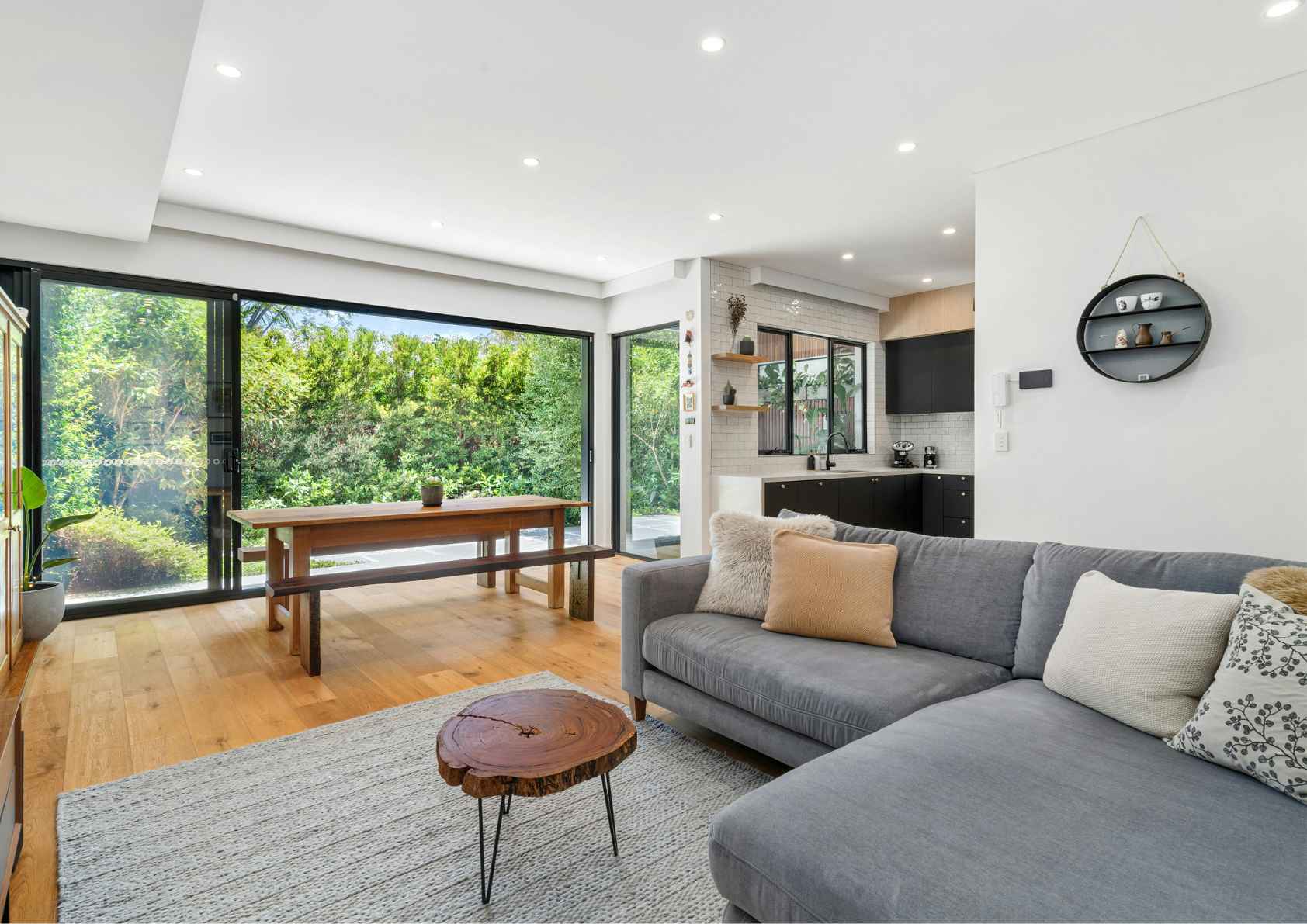
Open smaller but functional living space in a home. Open concept of the Ktichen, dinning area and living room.

This approach makes the home feel more connected and larger overall. Buyers notice when every area of a home feels accessible and welcoming. When you make a small home feel bigger, you’re really inviting the buyer to imagine their lifestyle unfolding comfortably in the space.

Use Vertical Design to Your Advantage

When you can’t build out, build up. Tall bookcases, wall-mounted shelves, and vertically hung artwork draw the eye upward, creating the illusion of height. This is an especially effective tactic in small bedrooms, bathrooms, or entryways where square footage is limited.

Buyers are drawn to homes that use space creatively. Highlighting vertical design features can help your listing stand out in a crowded market. It subtly communicates style, smart planning, and potential—all of which are powerful selling points.

Conclusion

Learning how to make a small home feel bigger is more than a clever design trick; it’s a real estate strategy that works. Today’s buyers value functionality, comfort, and aesthetics, no matter the square footage. By maximizing light, embracing multifunctionality, and thinking vertically, you can boost your home’s appeal and attract more competitive offers. Whether you’re preparing to sell or just want to fall in love with your space again, these tips will help you make the most of what you’ve got.