
Your First Offer Probably Shouldn’t Be Your Highest

Calculate Budget for Buying a Home 2

A lot of buyers walk into the offer stage thinking there are only two choices. They either come in with their very highest number right away, or they lose the house to someone else. That is a very emotional way to approach a negotiation, and it usually leads to one of two bad outcomes. Either the buyer overreaches too early, or they make a panicked decision because they assumed every listing required maximum force from the beginning.

That is exactly why your first offer probably shouldn’t be your highest unless the house, the competition, and the seller’s position clearly justify it.

The market this spring is not behaving like the frenzy years when buyers had to throw everything at a property just to stay in the running. HousingWire reported in April 2026 that price cuts were hovering around roughly one-third of listings and that there was a meaningful gap between asking prices and accepted prices, which is a strong sign that many sellers are still missing the mark on where buyers actually are. HousingWire’s broader read on the 2026 market was that pricing moves first and buyer response follows, which matters because it means many listings are not sitting in a position of total control.

Inman was making a similar point in early 2026 when it wrote about how buyers can still win in a higher-rate market. The takeaway was not that buyers should blindly swing harder. It was that they need to negotiate intelligently, look for savings, and stop assuming they have no room to work with just because rates are higher than they want them to be.

That is where buyers need to slow down and look at the actual position of the property in front of them. A home that just hit the market, shows beautifully, is priced well, and is likely to attract multiple offers is one kind of situation. A home that has been sitting, has already taken a price cut, or is competing against several similar listings is a different one. Treating those two situations the same is how buyers end up paying more than they needed to.

Real Estate News has also been pretty blunt about the tone of the 2026 market. In March, it reported that buyer stress remains high because of economic pressure and uncertainty, and that those emotions can push buyers into poor decisions and post-purchase regret if they are not careful. That is exactly the issue here. Buyers who come in at their absolute ceiling too early are often making a fear-based move, not a strategy-based one.

A good first offer should do two things at once. It should show the seller you are serious, and it should leave you room to respond if the deal starts shifting. Because deals shift all the time. Inspections uncover issues. Appraisals come in tight. Sellers counter on price, timing, or credits. If the buyer has already burned through every bit of negotiating room in the first move, the rest of the transaction gets harder than it needs to be.

That is the practical side of why your first offer probably shouldn’t be your highest. It is not just about the opening number. It is about protecting flexibility through the rest of the deal.

Real estate agent offer hand for customer sign agreement

Inman touched on this broader shift in March when it noted that negotiation has reentered the market in a real way, along with repair requests, closing cost credits, and a general return to terms actually mattering again. That is important because buyers are no longer operating in a market where every accepted offer is simply the one that came in hottest on day one. Structure matters now. Terms matter now. Leverage matters now.

Real Estate News added another useful angle in April when it wrote that buyers have an advantage in many markets this spring, especially in places where price drops are showing up and seller competition is building. That does not mean every buyer should come in low and expect a gift. It does mean buyers need to stop assuming they are always negotiating from weakness.

There is also the issue of regret, which buyers do not think about enough in the moment. It is one thing to “win” the house. It is another thing to feel good about the terms after the adrenaline wears off. Buyers who go straight to their max often have very little cushion left when something inevitably comes up later. Then a repair request feels heavier, a closing cost surprise hits harder, and the house starts feeling stressful before they even get the keys. That is not a great way to start.

A better approach is to look at the property honestly, understand the seller’s likely pressure points, and make the strongest serious offer you can make without backing yourself into a corner. Sometimes that number will be aggressive. Sometimes it will not. The point is that the decision should come from context, not panic.

So yes, there are moments when a buyer should come in very strong right away. If the property is clearly underpriced, demand is obvious, and the buyer knows losing the house would be a major setback, then the strategy changes. But that should be a deliberate choice, not the default setting for every offer.

That is the real message here. Your first offer probably shouldn’t be your highest because smart buyers do not negotiate based on nerves alone. They negotiate based on market position, property strength, seller leverage, and their own ability to stay steady through the entire transaction.

That is usually how better deals get made.
Why Smaller Homes Are Winning Right Now

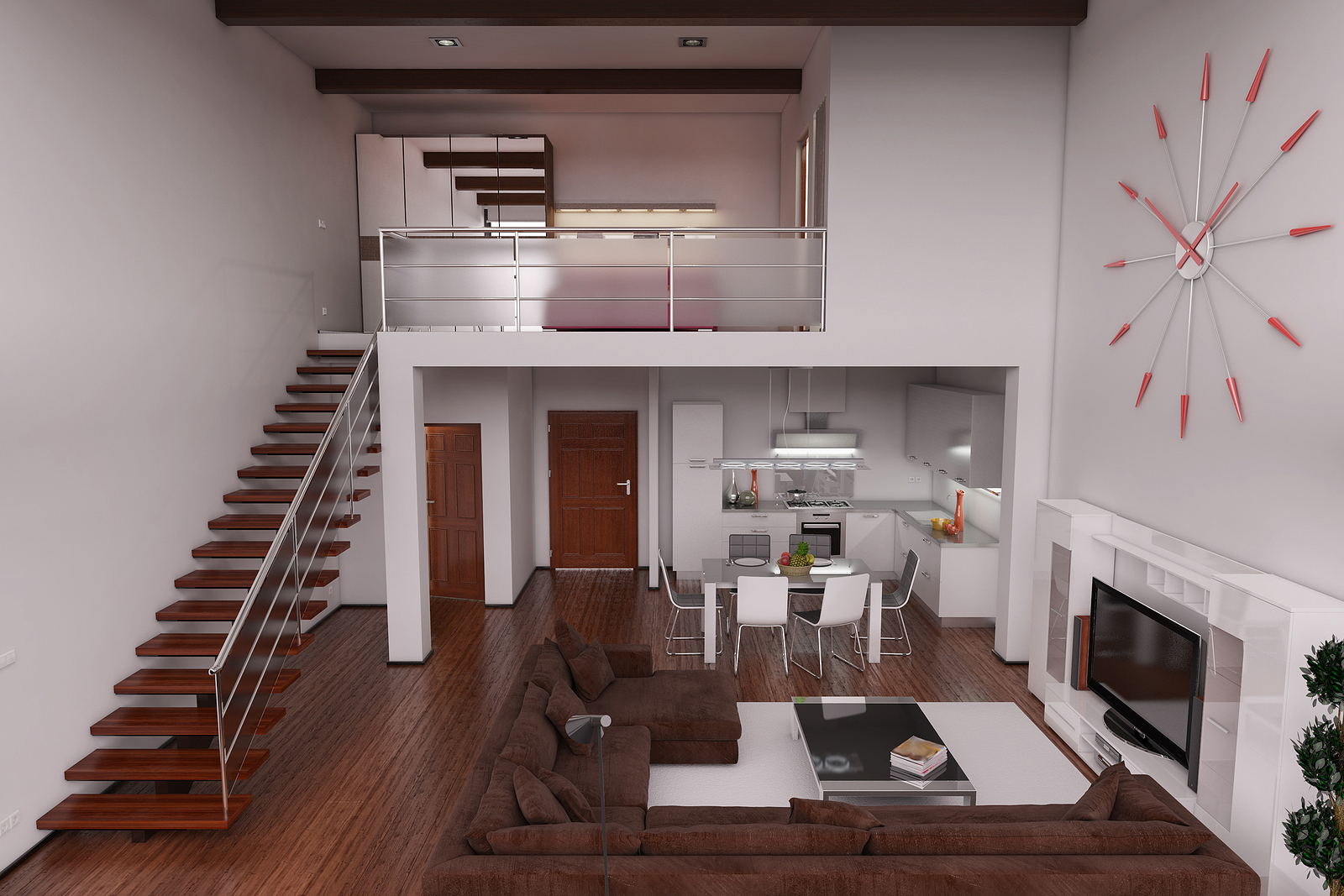
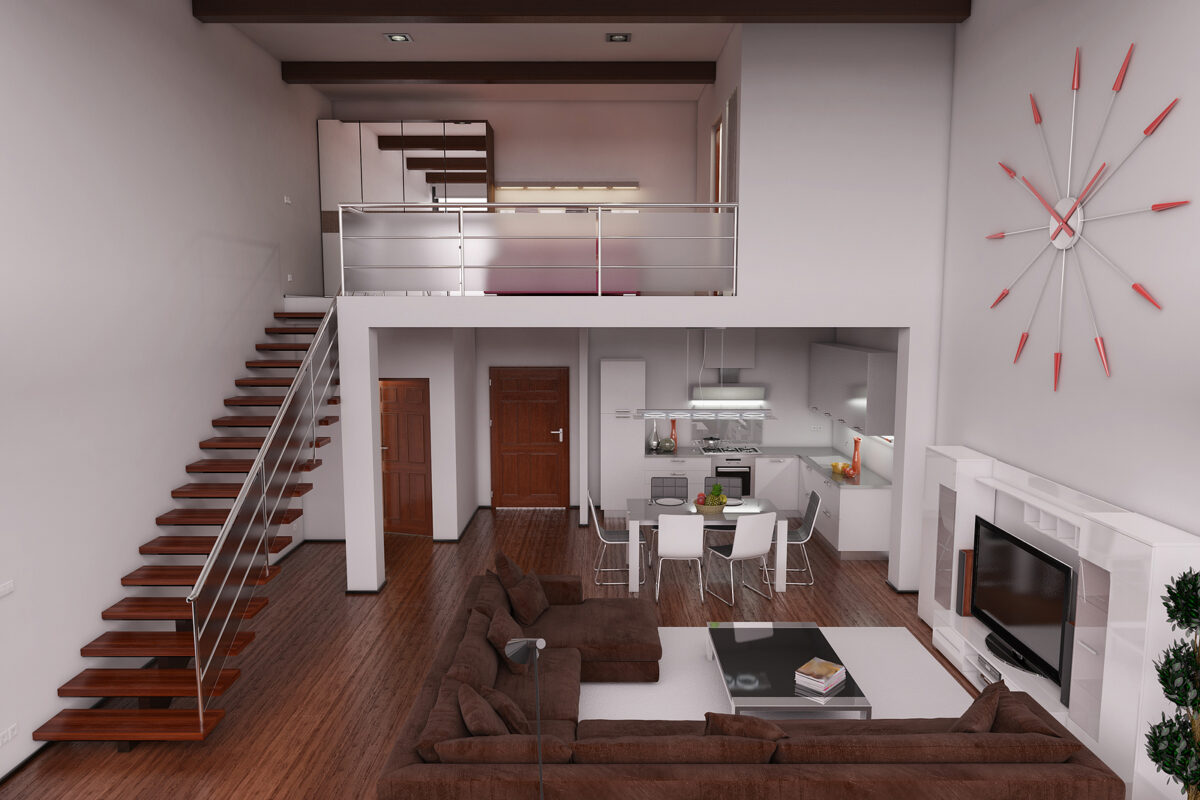
3D Interior rendering of a modern tiny loft

For a long time, bigger was the goal.

More square footage. More rooms. More storage. More space to spread out, fill up, and grow into. A larger home was often seen as the next step, the upgrade, the sign that you were moving forward.

That mindset has shifted.

A lot of buyers today are not looking for the biggest house they can afford. They are looking for the house that makes the most sense for how they actually live. That is a big reason why smaller homes are winning right now.

People are thinking differently than they used to. They are more aware of monthly costs, more aware of upkeep, and more aware that extra space is not always the same thing as better living. A house can be large and still feel wasteful, expensive, or harder to manage than it needs to be.

That is where smaller homes start making a lot more sense.

A smaller home usually costs less to buy, less to heat and cool, less to furnish, and less to maintain. That matters. Buyers are paying attention not just to the purchase price, but to the day-to-day cost of owning the home after the excitement wears off. Mortgage payments are only part of the picture. Utilities, repairs, cleaning, insurance, and upkeep all add up. More house usually means more expense in every direction.

That is one of the clearest reasons why smaller homes are winning right now. People want a home that fits their life without quietly draining their time and money.

There is also the issue of how people actually use space.

For years, buyers were sold on formal dining rooms, bonus rooms, oversized living areas, and square footage that sounded impressive on paper. But a lot of that space went underused. Rooms looked good in listing photos and then sat empty most of the year. Buyers are more aware of that now. They are asking better questions. Will we really use this room? Do we want to clean this much house every week? Are we paying for space just because it sounds nice to have it?

That kind of honesty changes the search.

Smaller homes often force better function. When space is limited, layout matters more. Storage matters more. Room purpose matters more. A well-designed smaller home can live better than a larger one with awkward flow or wasted space. Buyers are starting to see that. They would rather have a smart layout than a bunch of square footage they cannot justify.

That is another reason why smaller homes are winning right now. Buyers are paying closer attention to livability, not just size.

help for sick houseplants

Lifestyle plays a role too.

A lot of people do not want to spend their weekends maintaining a house they barely have time to enjoy. They want something easier. Easier to clean. Easier to furnish. Easier to leave for a trip. Easier to live in without constantly feeling behind on one more project. That is especially true for busy professionals, empty nesters, first-time buyers trying to stay financially comfortable, and even young families who would rather have a manageable home in the right location than a much larger one farther out.

Smaller homes also tend to make people more intentional. Less room often means less clutter, fewer unnecessary purchases, and a clearer sense of what actually matters. That may sound simple, but it changes how a home feels. A house does not have to be huge to feel good. It has to work.

And for many buyers, a smaller home works better than they expected.

That is a healthier way to buy.

It is also a big reason why smaller homes are winning right now in a lot of markets. They feel more attainable. They feel more practical. They feel less like a stretch and more like a decision buyers can live with comfortably.

There is a confidence that comes with buying a home you can truly handle. Not just on paper, but in real life. A smaller home can leave more room for savings, travel, improvements, and breathing room. It can mean less financial pressure and less daily strain. That trade-off is worth a lot more to people now than it used to be.

And honestly, a home does not need to be massive to feel meaningful.

It needs to fit your routines. It needs to support your life. It needs to give you the space you actually use, not the space you thought you were supposed to want.

That is what more buyers are figuring out.

So when people ask why smaller homes are winning right now, the answer is not complicated. They are cheaper to run, easier to maintain, and often better aligned with how people really live. They give buyers a chance to own without overreaching and to enjoy their home without constantly managing it.

That is not settling.

That is buying smarter.

Buying a Home Isn’t Just Math. It’s Confidence.

  Buying a home couple with their keys to the house happy 

A lot of people talk about buying a home like it is one big math problem.

What is the interest rate.
What is the monthly payment.
What is the down payment.
What is the tax rate.
What is the insurance cost.

Yes, all of that matters. Obviously. You should know your numbers. You should know what you can afford. You should know where your comfort level is before you even start seriously looking.

But that is not the whole story, and pretending it is usually leads people straight into bad decisions or endless paralysis.

Because buying a home is not just math. It is confidence.

A buyer can have all the numbers in front of them and still feel completely unsure. They can be approved, financially stable, and fully capable of buying, and still freeze when it is time to make a move. On the flip side, a buyer can fall in love with a house and convince themselves the numbers work when deep down they already know they are stretching too far.

That is because buying a home is not just a spreadsheet exercise. It is a decision about how you want to live, what you want your daily life to feel like, and whether you can move forward without second-guessing yourself every five minutes.

That last part matters more than people think.

A lot of buyers spend so much time chasing the perfect rate, the perfect deal, the perfect house, and the perfect timing that they completely lose sight of the bigger question. Do I feel good about this decision. Not just excited. Not just emotional. Not just relieved that I finally got an offer accepted. Do I actually feel good about it.

That is where confidence comes in.

Confidence is not recklessness. Confidence is not overpaying because you got caught up in a bidding war and decided logic was optional for the afternoon. Confidence is not ignoring red flags because the kitchen looked cute in the listing photos.

Confidence is knowing your numbers, knowing your priorities, and knowing where your line is before the pressure hits. That kind of confidence changes everything.

It means you do not walk into a house and suddenly invent a new budget because you liked the backyard. It means you do not panic when another buyer shows up. It means you do not let one pretty house throw you completely off course. It means you know what matters most to you and you can make decisions from that place instead of reacting to every little twist in the process.

And frankly, that is where a lot of buyers get themselves in trouble. They think if the math works, the decision works. Not always.

I have seen buyers qualify for a payment they absolutely hated living with. On paper, it worked. In real life, it made them feel tight every month. Suddenly dinners out felt stressful. Travel got cut. Savings slowed down. Every repair felt annoying instead of manageable. That is not a great house payment. That is a house payment that owns you.

I have also seen buyers pass on homes that made sense because they kept waiting for some magical scenario where everything felt one hundred percent certain. That does not exist either. There is no perfect market, no flawless house, and no moment where every variable lines up and angels sing while you sign the contract.

Portrait of a young woman has a question is asking herself something. Question mark over her head.

At some point, buyers have to move from analysis into decision.

That does not happen because the math got prettier. It happens because they got clearer.

That is why buying a home is so much about confidence. Confidence lets you separate what is real from what is noise. It helps you stop obsessing over every headline and start paying attention to your actual situation. It lets you look at a house and ask the right questions. Does this fit my life. Does this fit my budget. Does this fit the next few years, not just this weekend.

Confidence also keeps buyers from making emotional mistakes disguised as practical ones. Some buyers want to believe that if a lender approved them for it, it must be safe. That is not the same thing. Approval and comfort are not twins. They are cousins at best. One tells you what may be possible. The other tells you what is wise for your actual life.

That difference matters.

And then there is the confidence that comes from understanding the process itself. Buyers who know what inspections mean, what closing costs look like, how negotiations work, and what happens after an offer is accepted usually make better decisions because they are not being hit with everything at once. They are not buying in panic mode. They are buying with context.

That is what people really want, even if they do not say it that way. They want to feel steady. They want to feel informed. They want to feel like they are making a strong move, not just a desperate one.

That is why a good agent matters too. A good agent is not just there to show houses and fill out paperwork. A good agent helps clients get clear enough to move with confidence. They help buyers understand what matters, what does not, where to be flexible, and where to hold the line. They help calm the chaos so decisions stop feeling random and start feeling solid.

Because in the end, the right house is not just the one you can technically afford.

It is the one you can step into without that pit in your stomach telling you something is off.

It is the one that makes sense in real life, not just online. It is the one that works on an ordinary Tuesday, not just during an exciting showing. It is the one you can commit to without feeling like you need to talk yourself into it.

The Perfect Home Is a Myth, and What to Look for Instead

Calculate Budget for Buying a Home

A lot of buyers think they are looking for the one.

The perfect house. The perfect layout. The perfect street. The perfect kitchen. The perfect price.

And on paper, that sounds reasonable. Of course you want to love the home you buy. Of course you want it to feel right. Of course you want to make a smart decision.

But this is where buyers get stuck.

Because the perfect home is a myth.

how to buy a house that is not for sale 1

It does not mean there are no great homes. There are. It does not mean you should settle for something that clearly does not work. You should not. But if you go into the process thinking the right home will check every box without any trade-offs, you will either drag the search out forever or miss a house that was actually a very good fit.

That is what happens to a lot of buyers. They keep chasing a version of homeownership that only exists in their head.

The problem is not just unrealistic expectations. It is also how those expectations get built. Buyers spend hours scrolling listings, saving photos, comparing finishes, and building a running list of everything they want. Over time, that list gets longer and more specific. Then they walk into real homes and feel disappointed because the real world is not matching the version they built online.

That disconnect creates frustration fast.

It is one of the clearest reasons the perfect home is a myth. Buyers are not comparing homes to other homes anymore. They are comparing real properties to a fantasy that has no flaws, no compromises, and no price ceiling.

That is not a fair fight.

Every home comes with trade-offs. The bigger question is whether the trade-offs are ones you can live with comfortably. A house may have the right location but a smaller yard. It may have the kitchen you want but less closet space. It may check almost every box but need paint, flooring, or a few updates. That does not make it the wrong house. That makes it a real one.

The strongest buyers understand this early.

First time home buyers are shown on a business photo using the text

They stop asking whether a home is perfect and start asking whether it fits their life. That is a much smarter question. A home does not need to impress you in every category. It needs to work where it matters most.

That means figuring out your real priorities before emotion takes over.

What do you actually need day to day? Not what looks nice in listing photos. Not what would be fun to have if money were unlimited. What really matters? Commute. Layout. Bedroom count. School options. Yard space. Home office. Storage. Walkability. Quiet. Natural light. These are the things that shape daily life.

When buyers get clear on their real non-negotiables, the search gets better.

That is how you move past the idea that the perfect home is a myth and start finding homes that make practical sense. You stop expecting one property to solve everything. You start looking for the one that handles the things that matter most while leaving room for smaller imperfections you can live with.

And yes, there will almost always be imperfections.

That is not failure. That is homeownership.

Another reason buyers get tripped up is that they confuse polished with perfect. A staged home with beautiful photos and the right smell can create a strong emotional pull. That does not mean it is the right fit. At the same time, a home that shows a little less impressively online may actually have the layout, location, and long-term value that makes far more sense.

Buyers have to look past surface-level attraction.

This is where practicality matters. You can paint walls. You can update lighting. You can change fixtures, floors, landscaping, and finishes. What you cannot easily change is location, lot, floor plan, or overall function. Those are the things worth paying more attention to.

That is what to look for instead.

Instead of searching for perfect, look for strong bones. Look for a layout that fits your life. Look for a location you will still feel good about on an ordinary Tuesday, not just on the day you toured the home. Look for signs that the home has been cared for. Look for a payment you can live with comfortably. Look for a house that feels good enough now and still gives you room to grow into it.

That is a much healthier approach.

It also leads to better decisions because it takes pressure off the wrong things. Buyers who are waiting for some magical moment where the perfect house appears often miss homes that would have served them really well. They pass on good options because one bathroom is dated or the dining room is smaller than they hoped. Meanwhile, someone else buys the house and builds a very happy life there.

That happens all the time.

The truth is, the best home for you is usually not the one with zero flaws. It is the one with the right flaws. The manageable ones. The ones that do not interfere with how you live. The ones you can improve over time or simply stop noticing once the home becomes yours.

That is why the perfect home is a myth. Not because great homes do not exist, but because the real goal is not perfection. It is fit.

Happy husband and wife hugging excited to be a homeowner.

The right home should make sense financially, function well for your life, and feel like somewhere you can build from. That is more than enough.

And honestly, that is what most happy buyers end up with anyway.

Not perfect.

Just right where it counts.

What Buyers Regret Most After Closing, and How to Avoid It

Crop close up of female tenant renter show praise house keys moving to first own new apartment or house, happy woman owner buy purchase home, relocate to dwelling, rental, rent, ownership concept

Closing day feels like the finish line.

The paperwork is signed. The keys are handed over. Everyone smiles. The hard part is supposed to be over.

But for a lot of buyers, regret does not show up during the search. It shows up after the boxes are in the house and the adrenaline wears off.

That is when the little things start getting louder.

The layout that felt fine during a quick tour suddenly feels awkward every day. The commute starts wearing on you. The monthly payment feels tighter than expected. The repairs you hoped were minor start stacking up. The neighborhood you thought would grow on you never really does.

That is usually what what buyers regret most after closing comes down to. It is rarely one dramatic mistake. It is a series of small things buyers brushed past because they were focused on getting the deal done.

One of the biggest regrets is stretching too far financially.


A lot of buyers focus so hard on getting the house that they stop asking what it will actually feel like to live with the payment. Not just the mortgage, but the full picture. Taxes. Insurance. Utilities. Maintenance. Repairs. Furniture. Window coverings. Appliances that suddenly need replacing. All the normal costs that show up once the home is yours.

It is one thing to qualify for a number. It is another thing to live comfortably inside it.

That is one of the biggest lessons behind what buyers regret most after closing. A home can technically fit on paper and still feel too expensive in real life. Buyers who push to the top of their approval range often feel that pressure first.

Another common regret is choosing emotion over function.

Happy young couple home owners holding keys in new home. 

This happens all the time. Buyers walk into a beautiful house and fall hard for the kitchen, the staging, the natural light, or the charm. Meanwhile, they ignore the things that are going to affect daily life long after the excitement wears off.

The commute is longer than they wanted. There is not enough storage. The layout does not really work. The home office is not practical. The yard is more work than expected. The primary bedroom is smaller than they convinced themselves they could live with.

In the moment, people tell themselves they will adjust.

Sometimes they do. Sometimes they do not.

That is a huge part of what buyers regret most after closing. They bought the feeling of the home without thinking hard enough about how it would actually function day to day.

Repairs are another big one.

A lot of buyers underestimate condition because they are so focused on winning the house. They tell themselves a few updates are not a big deal. They assume they will tackle things over time. Then they move in and find out the to-do list is longer, more expensive, and more urgent than they expected.

What looked manageable during the transaction starts to feel different when it is your money and your weekend disappearing into it.

This does not mean buyers should avoid any home that needs work. It means they need to be honest about what they are taking on. Cosmetic updates are one thing. Deferred maintenance is another.

Location regret shows up more than people expect too.

Sometimes buyers get caught up in the house itself and talk themselves into a neighborhood, commute, or area that they were never fully sure about. They think the house will make up for it. But once the routine starts, location becomes harder to ignore.

The truth is, buyers can change paint, flooring, fixtures, and landscaping. They cannot change where the house is.

That is why what buyers regret most after closing often ties back to the things they cannot easily fix.

Then there is the regret of moving too fast without fully understanding the process.

Some buyers get all the way through closing without really understanding what inspections mean, how repair requests work, what their closing costs are, or how much cash they need after move-in. By the time they realize it, the deal is done and the surprises feel expensive.

A lot of post-closing regret is really pre-closing confusion.

The buyers who usually feel best after closing are not necessarily the ones who bought the perfect house. They are the ones who understood what they were buying, what it would cost, and what trade-offs they were making.

That is how you avoid regret.

You do not avoid it by chasing some flawless house that does not exist. You avoid it by slowing down enough to ask better questions before you commit. Can I really afford this comfortably? Does this home work for my actual life, not just my ideal one? Am I okay with the condition? Am I at peace with the location? Do I fully understand what comes next?

Those questions matter more than people think.

Because what buyers regret most after closing usually is not that they bought a house. It is that they ignored what they already knew deep down because they were afraid to lose it.

And that is the part buyers should pay attention to.

If something feels off, slow down. If the numbers feel too tight, listen. If the location is a compromise you are already trying to justify, be honest. Excitement is part of buying a home, but clarity matters more.

The right house should still make sense after the keys are in your hand.

Think Like an Investor, Even If This Is Your Forever Home

A lot of buyers say the same thing when they find the house they want.

“This is our forever home.”

Maybe it is. Maybe it is not.

Life changes. Jobs change. Families grow. Kids leave. Health changes. Priorities shift. What feels permanent today may not fit the same way ten years from now.

That is why it helps to think like an investor, even if you are buying a home you fully expect to keep for a very long time.

This does not mean treating your home like a cold business deal. It does not mean stripping all joy out of the process or choosing a house you do not love just because the spreadsheet says it makes sense. It means understanding that a home is both personal and financial at the same time.

The smartest buyers respect both sides.

When people hear the phrase think like an investor, they often assume it only applies to rental properties, flips, or people building wealth through real estate on purpose. But the truth is, every home purchase has long-term financial consequences whether you think about them or not.

You are putting money into an asset. You are taking on costs, risk, and responsibility. You are making decisions that affect future flexibility.

That deserves a little strategy.

One of the first ways to think like an investor is to pay attention to location in a practical way. Not just whether you personally like the street or the drive to your favorite coffee place, but whether the area has staying power. Are people drawn to it? Are there things that make it consistently desirable, such as access, schools, amenities, walkability, or stability? The features that hold value over time matter, especially if life forces a change you did not plan for.

Young couple buying a home.

A forever home still benefits from being in a place other people would want too.

Layout matters the same way.

A home can be beautiful and still be harder to sell later if the floor plan is awkward, the bedroom count is limited, or key spaces do not function well. Buyers often get distracted by finishes because countertops and fixtures are easier to notice than flow. But layout is what affects how a home lives day to day and how broadly it appeals later.

That is another reason to think like an investor. Timeless function usually holds value better than trend-driven style.

The same goes for upgrades.

A lot of homeowners pour money into improvements assuming every dollar spent increases value. It does not. Some updates are smart. Some are neutral. Some quietly make a home harder to sell because they are too personal, too expensive for the area, or too specific in taste.

Thinking strategically does not mean never improving your home. It means asking better questions before you do. Will this make the home more usable? Will it solve a real issue? Will it help the property age well? Or is it simply something I want because I like it?

There is nothing wrong with the second answer. But it helps to know the difference.

When you think like an investor, you start separating what adds lifestyle value from what adds market value. Sometimes those overlap. Sometimes they do not. That clarity helps you make stronger decisions.

Another part of this mindset is understanding monthly cost beyond the mortgage.

A home may technically fit your budget and still not be a great financial move if taxes, insurance, utilities, maintenance, and future repairs stretch you too far. Investors look at the full cost picture. Homeowners should too. A forever home should still leave room for living.

The goal is not to be house-rich and life-poor.

This matters because even a home you love can become stressful if the financial pressure is constant. That pressure limits options later. It affects how easily you can move, refinance, renovate, or adapt if life changes.

That is why it is wise to think like an investor before you buy, not after you feel stuck.

There is also the question of resale, even if you swear you will never sell.

Most people do not buy a house planning for divorce, relocation, job loss, caregiving, or unexpected opportunity. But those things happen every day. The home that felt like a forever choice can become a five-year choice or a ten-year choice very quickly.

That does not mean buying defensively. It means staying aware.

Would this home appeal to more than just me? Does it have broad strengths? If I had to sell in a different market, would it still stand out? Those are smart questions, not pessimistic ones.

When you think like an investor, you are not betting against your own future in the home. You are protecting yourself if the future changes.

And honestly, there is freedom in that.

It means you can enjoy the home you love while also knowing you bought with your eyes open. You did not just chase emotion. You paired emotion with judgment. You considered not only what feels good today, but what still makes sense tomorrow.

That is a much stronger place to buy from.

A home should absolutely feel personal. It should fit your life. It should feel like somewhere you want to wake up, host people, build routines, and make memories. But it should also make sense as an asset. Those two things are not in conflict. In fact, the best home decisions usually come from balancing both.

So yes, buy the house that feels right.

Just make sure you also think like an investor while you are doing it.

Because even if this really is your forever home, smart decisions never go out of style.